Sound of Music Filming Locations
An honest, location-by-location guide to where The Sound of Music was really filmed in and around Salzburg — Mirabell, Nonnberg, Leopoldskron, Hellbrunn, Residenzplatz and Mondsee — and which stops are walkable versus a drive.
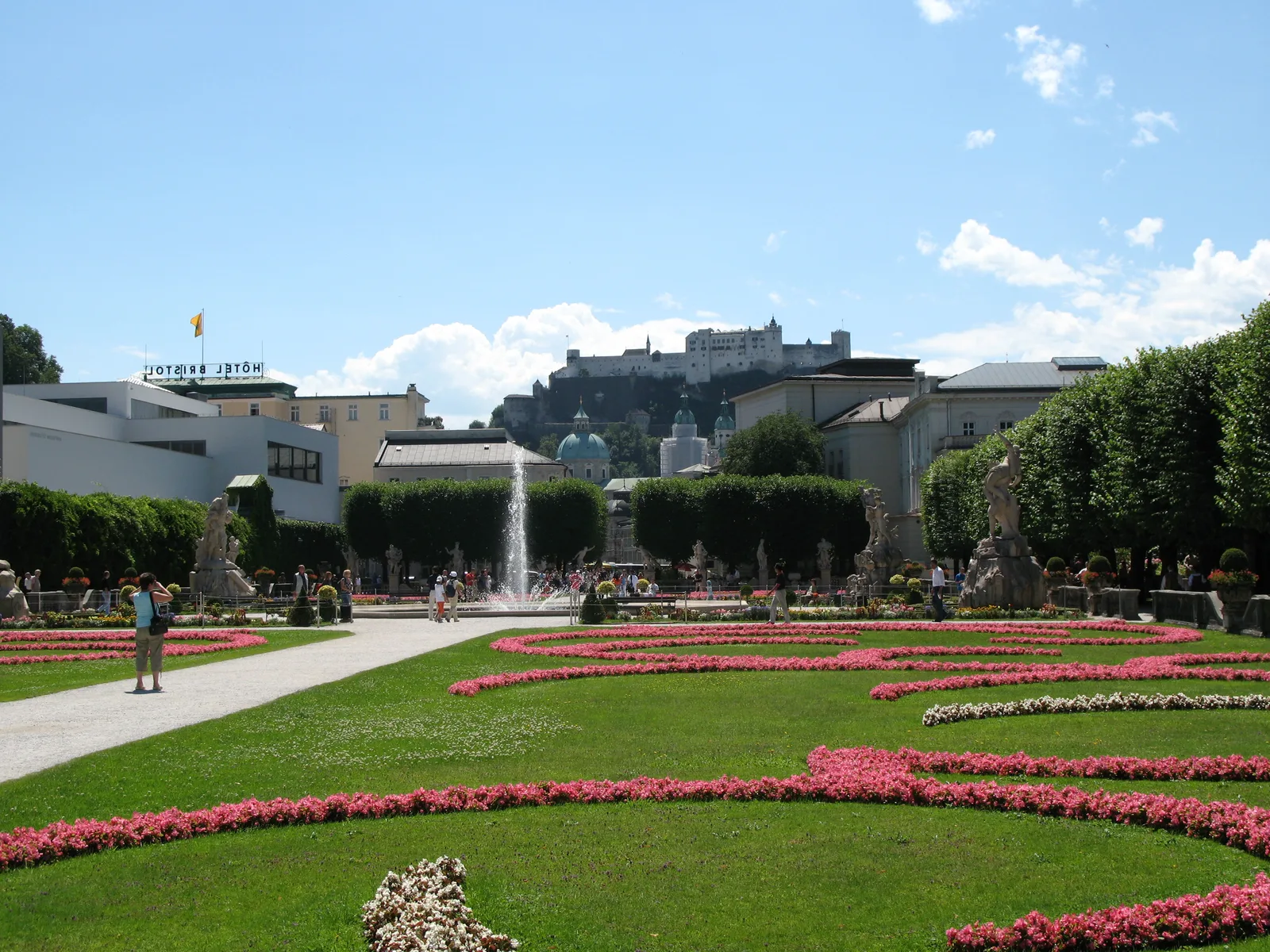
Photo: Andrew Bossi / Wikimedia Commons · CC BY-SA 2.5
- ✓Mirabell Gardens is the headline in-city stop — the Pegasus Fountain, the dwarf garden and the terraced steps all feature in the 'Do-Re-Mi' montage, and it is free and central.
- ✓Schloss Leopoldskron and the neighbouring Schloss Frohnburg stood in for the von Trapp villa's lakeside terrace and front entrance — but the grounds are private, so you view the famous lake side from the public path opposite.
- ✓Nonnberg Abbey is the one genuinely 'real' location: Maria von Trapp really was a novice there before the story the film tells.
- ✓The 'Sixteen Going on Seventeen' gazebo no longer stands by a lake — it was moved into the grounds of Hellbrunn Palace south of the city.
- ✓The wedding was filmed in the Basilica St Michael at Mondsee, about a 30-minute drive east, not in Salzburg itself.
- ✓Several headline shots — Residenzplatz, the Felsenreitschule, the Untersberg meadows — are scattered, so plan by transport, not by film order.
What was really filmed where — and why it matters
The Sound of Music has sent travellers to Salzburg for sixty years, and almost as long has spawned a fog of half-truths about which corner stood in for which scene. The honest picture is more interesting than the myth: Robert Wise's 1965 production stitched its Salzburg together from a dozen separate real places, some a short walk apart, some a half-hour drive away, and a few interiors that were never in Austria at all but on a Hollywood sound stage. Knowing the difference is the whole game, because it turns a vague pilgrimage into a route that actually delivers the moments you came for.
This guide walks the locations in two clear groups: the stops you can reach on foot inside the city, and the ones that need wheels. Treat it as the map behind whichever way you choose to see them — a guided bus tour, a bike tour, a private car or a self-guided day. We flag what is the genuine article, what is a clever stand-in, and what has quietly moved since 1965, so you arrive knowing exactly what you are looking at.
One framing note before you set off. The film compresses geography for drama — most famously the family's 'escape over the mountains', which in reality would have walked them toward Germany, not away from it; the real von Trapps left quietly by train. Hold the story loosely and the locations lightly, and Salzburg gives you something better than a film set: a real Baroque city that a beloved film happened to borrow.
The in-city stops you can walk to
Start where most of the recognisable scenes were actually shot, all within the walkable centre. Mirabell Gardens is the set piece: the children dance up and down the terraced steps, ring the Pegasus Fountain, weave through the dwarf garden of the Zwergerlgarten and pose along the rose-bowered tunnel in the 'Do-Re-Mi' sequence. The gardens are free and open daily, the central axis points straight at Hohensalzburg Fortress for the postcard frame, and they are quietest just after opening, before the tour groups arrive.
From Mirabell, the rest of the in-city stops form a loose loop. Residenzplatz, the grand left-bank square with its Baroque Residenzbrunnen fountain, appears as Maria sings and splashes her way into town; the horse pond of the Pferdeschwemme nearby also flashes past. Up on the fortress shoulder, Nonnberg Abbey supplied the convent gate and forecourt — and this is the one stop that is genuinely the real place, since Maria really was a novice there. The Felsenreitschule, the rock-hewn riding-school auditorium that is now a Festival stage, is where the family give their final, tense concert before slipping away; it is part of the Festspielhäuser complex and best seen on a backstage or Festival visit rather than dropped in on.
These cluster tightly enough that a relaxed half-day on foot covers them with time for coffee. The river itself does double duty: cross the Makartsteg or stroll the Salzach bank between the right-bank gardens and the left-bank squares and you are tracing the same water the camera loved.
- Mirabell Gardens: the 'Do-Re-Mi' steps, Pegasus Fountain, dwarf garden and rose tunnel — free, central, best early.
- Residenzplatz: the Residenzbrunnen fountain and square Maria sings through on her way into the city.
- Nonnberg Abbey: the real convent gate and forecourt — visit respectfully, it is a working enclosed community.
- Felsenreitschule: the rock riding-school stage of the farewell concert, inside the Festival complex.
- Pferdeschwemme & the Salzach banks: quick supporting shots that knit the city scenes together.


The von Trapp villa: Leopoldskron and Frohnburg
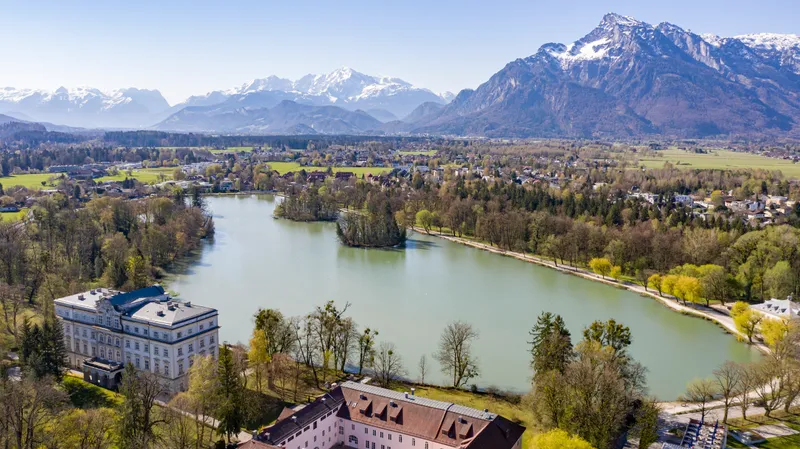
The family home you remember is not one building but two, and neither is the real von Trapp house (that survives elsewhere in the city and is now a hotel, but was not used in the film). For the lake side — the terrace where the children fall out of the boat, the lawn running down to the water — the production used the grounds of Schloss Leopoldskron, an 18th-century rococo palace set on its own small lake, the Leopoldskroner Weiher, in the city's quiet south-west. For the front of the house, the gate and the gravel forecourt, they filmed at the neighbouring Schloss Frohnburg, a separate palace now used by the Mozarteum music university.
Here is the practical catch that trips up most first-timers: Leopoldskron is a private hotel and conference venue, and Frohnburg is a working academy, so neither lets the casual visitor wander up to recreate the shots. The trick the film relied on is that the most iconic lake view is taken from across the water — and you can stand on that same public side. Walk the path around the Leopoldskroner Weiher, or come at it from the bank opposite, and the palace lines up with the lake and the mountains for the view everyone wants, without setting foot on private ground. Stay on public paths, keep your voice down near the hotel, and you will get the photo and keep the welcome.
Because both palaces sit a couple of kilometres from the centre, this is the point where an in-city walk wants to become a bike ride, a bus hop or a tour leg. It pairs naturally with the Hellbrunn gazebo just to the south.
The gazebo, Hellbrunn and the out-of-town stops
Two of the most-asked-about scenes are out of the centre, and one has physically moved since you last watched the film. The glass pavilion of 'Sixteen Going on Seventeen' and 'Something Good' — the gazebo — was a film prop that originally sat by Leopoldskron's lake, then was relocated for visitors and now stands in the grounds of Hellbrunn Palace, the playful Baroque pleasure villa with its trick fountains a few kilometres south of the city. You can see and photograph it from outside; interior access is limited and arranged through the palace, partly because fans kept trying to leap from bench to bench. Hellbrunn's free park makes the trip worthwhile in its own right.
The wedding is the other big one, and it is a genuine drive: Maria and Georg marry in the Basilica St Michael at Mondsee, a twin-towered yellow church above the lakeside town of the same name, roughly half an hour east into the Salzkammergut. It is a working parish church, beautiful in its own right, and an easy add-on to a lakes day. Further afield, the opening aerial sweeps and the meadow where Maria spins and sings the title song were filmed in the alpine country around the Untersberg and across the German border near Berchtesgaden — gorgeous, but spread out, which is why most travellers leave those to a tour bus rather than chasing them solo.
The upshot: build your day around the in-city cluster first, then decide how far out you want to go. Add Hellbrunn for the gazebo, Mondsee if you fancy the lakes and the wedding church, and leave the scattered mountain shots to a guided coach unless you have a car and a generous appetite for driving.
- The gazebo: now in the Hellbrunn Palace grounds (moved from Leopoldskron) — view from outside, interior by arrangement.
- Hellbrunn Palace: trick fountains and a free park; the gazebo's current home, south of the city.
- Mondsee — Basilica St Michael: the wedding church, about 30 minutes' drive east; a working parish church.
- Untersberg & Berchtesgaden meadows: the opening and title-song scenery — beautiful but scattered, best by tour.


At a glance: planning the route
Use this as a planning sketch. Opening hours, the Hellbrunn fountain season and any concert or Festival access at the Felsenreitschule change with the calendar, so confirm current details with each site before a special trip — we'd always say verify locally rather than rely on a fixed timetable.
- Walkable cluster (half a day): Mirabell Gardens, Residenzplatz, Nonnberg Abbey, riverside and Festival-quarter shots.
- Needs wheels (bike, bus or car): Leopoldskron and Frohnburg lake palaces, Hellbrunn for the gazebo.
- Needs a drive (half to full day): Mondsee for the wedding church; Untersberg and Berchtesgaden for the scenery.
- Real vs stand-in: Nonnberg is the genuine place; the villa is two palaces combined; the gazebo has moved.
- Cost: the in-city stops are free to view; Hellbrunn and Mondsee's church may charge or invite a donation — verify.
- Best timing: Mirabell at opening for calm; Leopoldskron in soft late light from the public lake path.
Related guides
Sound of Music in Salzburg
Filming locations, tours, what is in the city, what needs a drive and how to avoid disappointment on a Sound of Music trip.
Read guide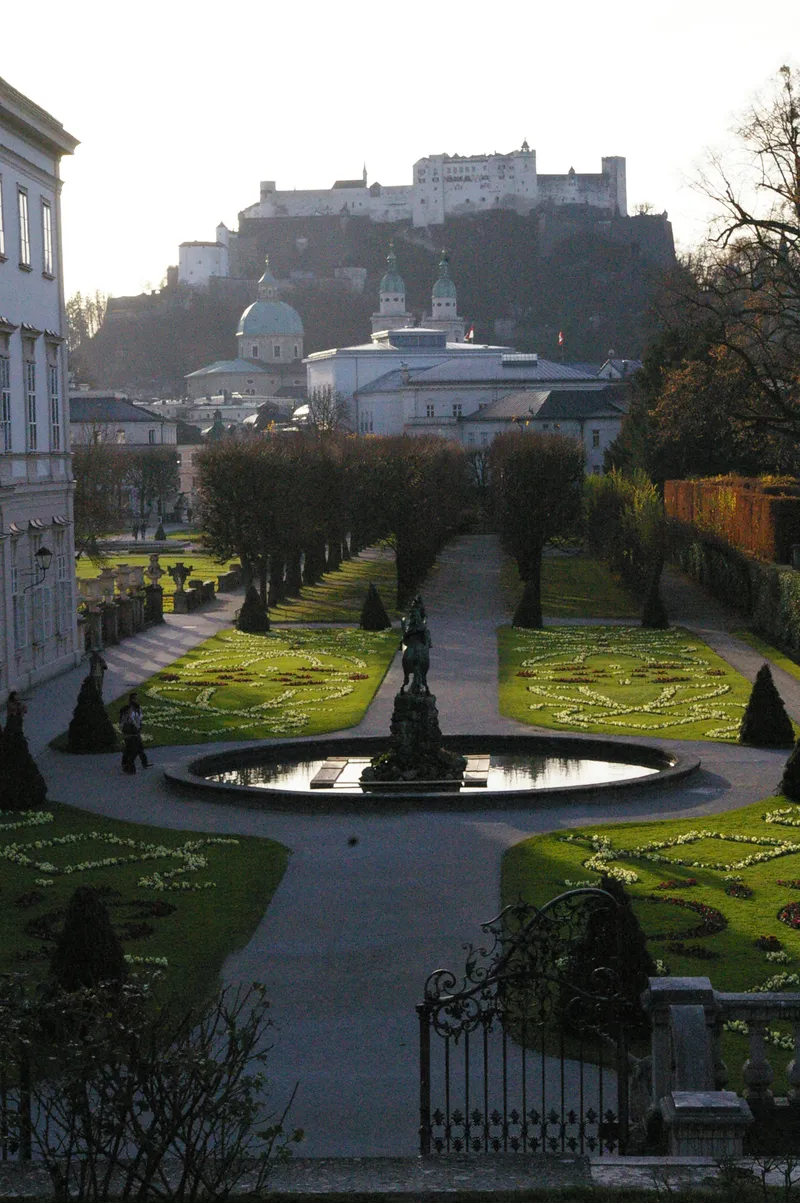
Best Sound of Music Tours
An honest comparison of the ways to see The Sound of Music in Salzburg — classic bus tours, bike tours, private cars and self-guided routes — by locations covered, time, singing level, budget and value.
Read guide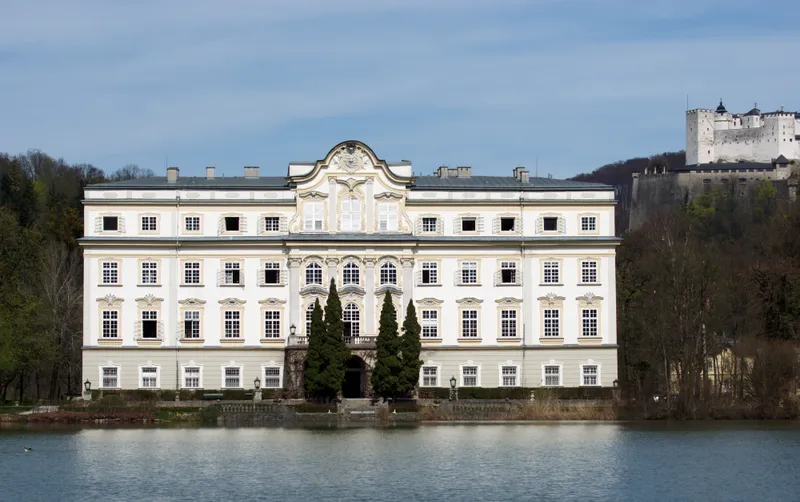
Schloss Leopoldskron Guide
How to see Schloss Leopoldskron — the rococo palace that stood in for the von Trapp villa's lake side — where to stand for the Sound of Music view, hotel access, photo etiquette, the lake walk and whether staying there is worth it.
Read guideMore in Sound of Music
2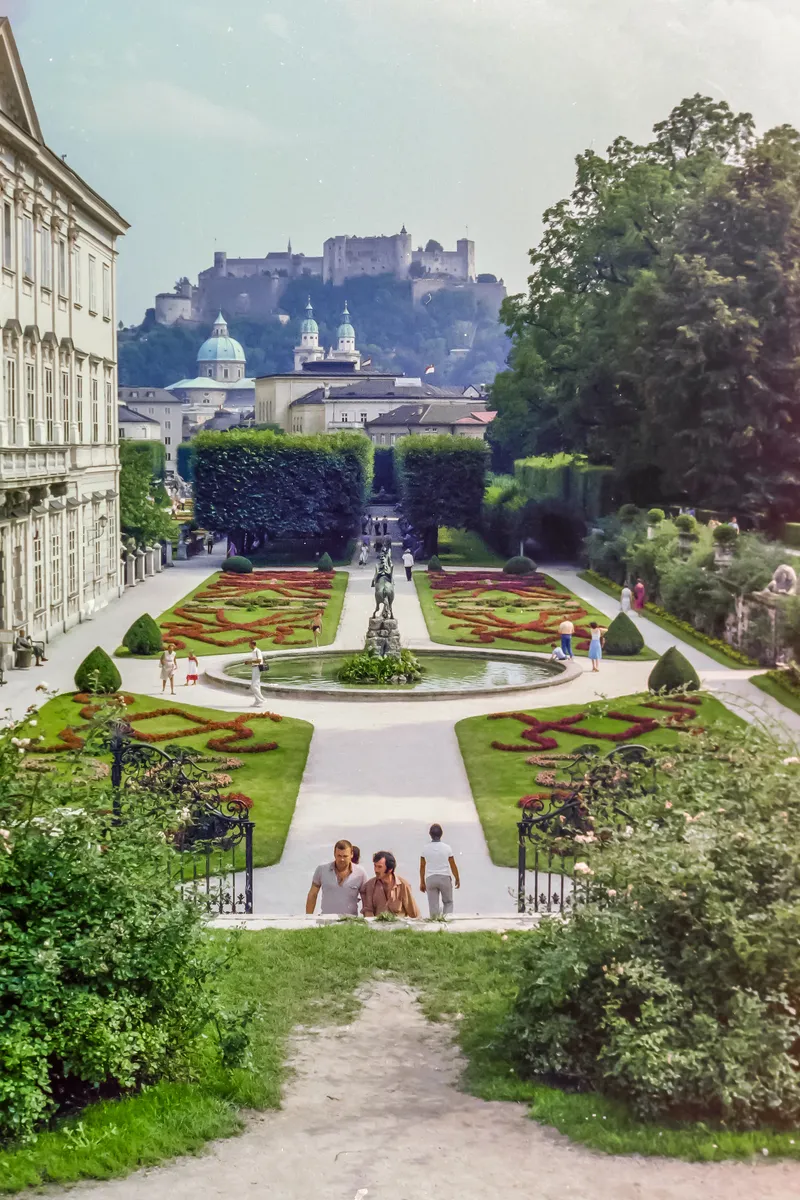
DIY Sound of Music Tour
A self-guided, step-by-step Sound of Music route through Salzburg — Mirabell, Residenzplatz, Nonnberg, the Leopoldskron lake view and the Hellbrunn gazebo, with an optional drive to Mondsee — done for free, at your own pace.
Read guide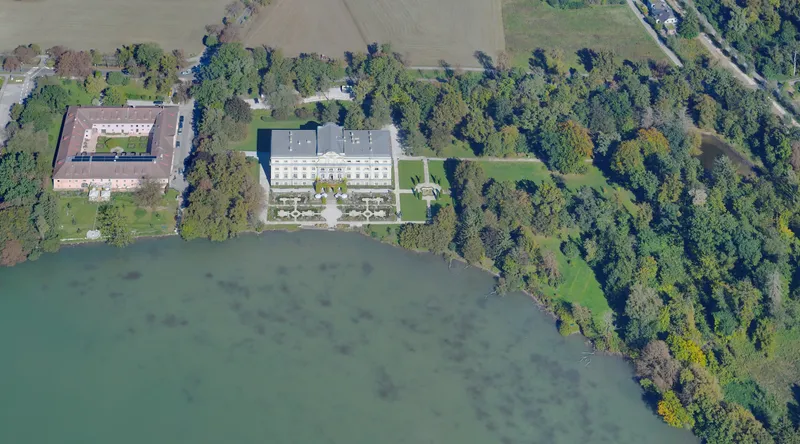
Sound of Music Bike Tours
When a Sound of Music bike tour beats the bus — the flat city-and-suburb route it covers, what it skips, and honest notes on weather, fitness, family fit and how it compares to the coach.
Read guide