 Things to Do
Things to Do in Salzburg
The complete hub for what to do in Salzburg — the fortress, Mozart sights, Mirabell, the Old Town squares, Sound of Music stops, viewpoints and Alpine day trips, grouped so you never backtrack.

Photo: Erik Odiin / Unsplash
- ✓Hohensalzburg Fortress is one of the largest fully preserved castles in Central Europe — begun in 1077 and never taken by siege; ride the Festungsbahn up for the whole-basin view.
- ✓The UNESCO Altstadt is compact and almost entirely walkable, folded inside a tight loop of the Salzach river.
- ✓Mozart was born at No. 9 Getreidegasse in 1756; the Birthplace museum has welcomed visitors since 1880.
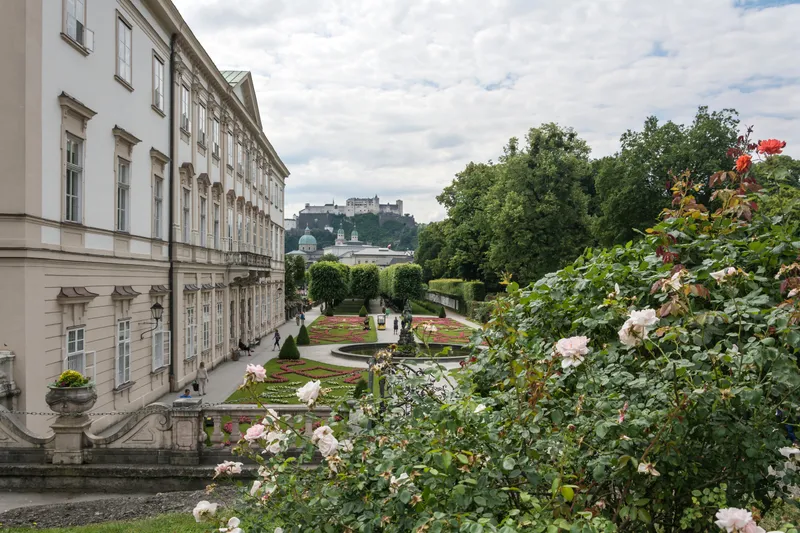
- ✓Mirabell's Baroque parterre frames the fortress in the city's single most photographed view — and the steps feature in the Sound of Music.
- ✓Two unhurried days cover the essentials and still leave room for a Salzkammergut lake or a salt-mine day trip.
Start with the river, then climb the fortress
Salzburg rewards wandering before it rewards a checklist. The Old Town is a Baroque amphitheatre of squares, marble fountains and copper domes, all of it staged beneath a fortress that loomed over the city for more than nine centuries and was famously never taken by force. The cleanest way to think about your time is to build outward from the Salzach: the left bank for the cathedral, the Residenz and the Festung; the right bank for Mirabell and the Mozart houses; then, if you have it, one clear day for the lakes and mountains.
This hub is the map of everything below — what to book ahead, what is gloriously free, and how to group sights by area so you are never doubling back across the same bridge three times in a morning. Almost nothing in the centre is more than a fifteen-minute walk from anything else, so plan by neighbourhood and mood rather than by chasing a numbered list.
If you only have a single focused day, the left-bank stage is the answer: Domplatz, the Residenz, Mozartplatz and the funicular up to the fortress, finished with a quiet half-hour in St. Peter's churchyard. Add a second day and the right bank opens up — Mirabell at opening time, the Mozart Residence on Makartplatz and a slow Linzergasse afternoon. From three days you can reach Hallstatt, the wider Salzkammergut, or the salt mines and ice caves of the Tennengau.


The fortress and the Mönchsberg heights
Hohensalzburg is the sight almost everyone climbs to, and rightly so. The prince-archbishops began the castle in 1077 and kept enlarging it for centuries; its position on the Festungsberg, and the fact that it was never stormed, is precisely why Salzburg still has its medieval and Baroque heart intact. Inside are the lavish late-Gothic state rooms (the Golden Hall and Golden Chamber), the fortress museums, the Marionette Museum and the Reckturm watchtower, which delivers the definitive panorama over the domes, the river and the Untersberg massif beyond.
You reach it two ways. The Festungsbahn funicular climbs from Festungsgasse in the Old Town in a minute or two — the easy, all-weather option, and a small piece of history in its own right as one of the oldest funiculars of its kind still running. Or you walk the steep cobbled path up, which is free, scenic and entirely doable if your knees are willing. Either way, check whether the Salzburg Card covers the funicular and admission before you buy a separate ticket.
The same ridge of hills carries on north as the Mönchsberg, a long wooded plateau of viewpoints, terraces and quiet paths that most day-trippers miss entirely. It is the antidote to the crowded squares below: ride the Mönchsberg lift up beside the Museum der Moderne, walk the panorama path, and you have the city laid out at your feet with almost nobody around.


The Old Town squares, churches and lanes
The left-bank Altstadt is a UNESCO World Heritage Site, prized for its remarkably preserved Baroque townscape and its dramatic mountain setting. It is also small enough to cross on foot in a quarter of an hour, which means you keep stumbling back onto your own path — and that is the pleasure of it. The ceremonial heart is a chain of three linked squares: Domplatz under the cathedral, the grander Residenzplatz with its giant Baroque fountain and the Glockenspiel carillon, and Mozartplatz with the composer's statue.
Salzburg Cathedral (the Dom) is the early-Baroque set piece, an Italian-influenced church of pale marble and a soaring dome where Mozart was baptised and later worked as organist. Behind and around it spread the Residenz state rooms, St. Peter's Abbey and its astonishing rock-cut catacombs and cemetery, and the Franciscan and Collegiate churches. Getreidegasse, the famous shopping canyon, runs west off the squares beneath a forest of wrought-iron guild signs, with Mozart's Birthplace at No. 9. Duck through the passageways between Getreidegasse and the river — the Durchhäuser, or pass-through houses — because the hidden courtyards are some of the loveliest corners in the city.

Mozart, music and the Sound of Music
Salzburg thinks in music — it is the city's key signature. The Mozart story is told across two houses: the Birthplace on Getreidegasse, where the family lived for years and where Wolfgang was born in January 1756, and the larger, later Mozart Residence on Makartplatz across the river, where the family moved as their fortunes rose. Together they trace one family's arc from a cramped third-floor apartment to a grander address.
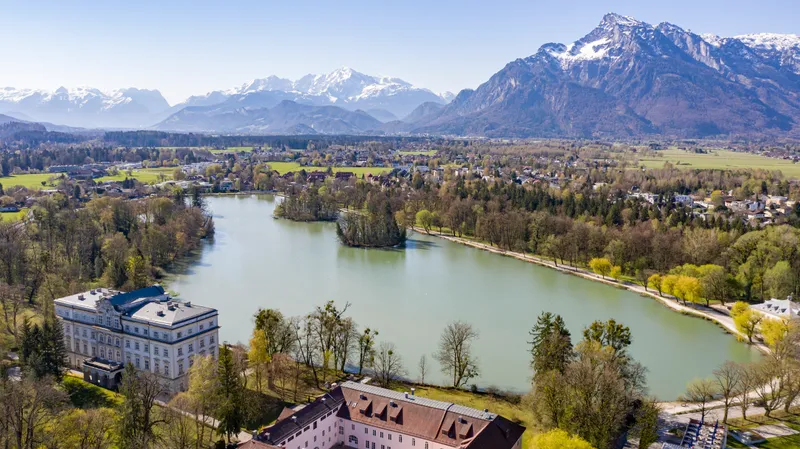
Hearing the music well is its own small art. Fortress concerts pair Mozart with the candlelit Golden Hall and a funicular ride; Mirabell concerts use the jewel-box Marble Hall, one of the most beautiful small concert rooms in Europe; dinner concerts at St. Peter's blend a meal with the programme. Choose by setting as much as by repertoire. And then there is the other Salzburg soundtrack: the Sound of Music. Several headline scenes were filmed right in the city — Mirabell Gardens, Residenzplatz, the Nonnberg Abbey — while the gazebo at Hellbrunn, the lakeside drama and the wedding church at Mondsee need a short drive.
Gardens, river walks and viewpoints
For all its marble and ceremony, Salzburg is a green and watery city, and some of its best hours cost nothing. Mirabell is the right-bank set piece: a formal Baroque garden of clipped hedges, fountains and mythological statues, laid out so its central axis points straight across the river at the fortress. Go just after it opens and you can have the parterre almost to yourself, before the tour groups arrive. The Pegasus Fountain and the terraced steps are the Sound of Music's 'Do-Re-Mi' moments.
The Salzach itself is a pleasure to walk. The Makartsteg footbridge, hung with love-locks, frames the fortress for the classic river photo, and the promenades on both banks make for an easy, level stroll between the Old Town and Mirabell. For height without effort, ride the Mönchsberg lift; for height with a climb, walk up to the fortress or out along the wooded ridge. Further afield but still in town, the Baroque water-gardens and trick fountains of Hellbrunn make a charming half-day, especially with children.


Eat, drink and rest between the sights
Salzburg eats well between the postcards. The local sweet to try once, ideally shared, is the Salzburger Nockerl — a billowing, mountain-shaped soufflé meant to echo the city's three hills. Café Tomaselli is the grand old coffeehouse; Café Fürst is where the original Mozartkugel was invented and is still handmade. For something heartier, the Augustiner Bräustübl in Mülln pours beer straight from wooden barrels under chestnut trees, and St. Peter Stiftskulinarium, tucked against the abbey rock, claims to be one of the oldest restaurants in Central Europe.
Where you base yourself shapes the trip more than you'd expect for so small a city. The Altstadt puts you among the sights but also among the crowds, the cobbles and the steps; the Neustadt around Mirabell is calmer, polished and a short walk from the station. Match the neighbourhood to how you actually want to travel, then turn that into a hotel choice.

Day trips into the lakes and mountains
Salzburg sits at the mouth of the Salzkammergut, the lake-and-mountain region where the old salt road once met the Alps, so the day trips are exceptional. Hallstatt is the headline lake village, impossibly photogenic and reachable by train and boat; the wider Salzkammergut around it — Wolfgangsee, Mondsee, St. Gilgen — rewards a slower loop by car or bus. Just over the German border, the Eagle's Nest and Berchtesgaden, the emerald Königssee and the Bavarian Alps make an easy organised day.
Closer to home, the Hallein salt mines explain the white gold that built the city, the Werfen ice caves and the Hohenwerfen fortress are dramatic, and the cable car up the Untersberg gives a quick Alpine summit on Salzburg's doorstep. Many of these are doable by public transport for non-drivers — check which need a tour and slot one into a longer stay rather than overcrowding a single day.


Plan it by season — and book the right ticket
Salzburg has four strong, distinct seasons, and they change the trip completely. High summer, late July into August, is Festival season — the cultural peak, with the heaviest crowds and the most hotel pressure of the year. Advent brings a second peak, when the Christkindlmarkt on Domplatz and Residenzplatz, one of the oldest Advent markets anywhere, fills the squares from mid-November. Spring is for the gardens, the Easter Festival and comfortable walking; the January Mozart Week is the connoisseur's quieter, lower-cost window.
Two practical things are worth getting right. The Salzburg Card (in 24-, 48- and 72-hour versions) is a sightseeing product bundling one-time free admissions and the funicular and lifts — distinct from a transport ticket. Separately, since May 2025 overnight guests receive a Guest Mobility Ticket for regional public transport; don't confuse the two. And remember it is an Alpine city: pack a layer even in summer, when warm afternoons turn to cool evenings.


Free Salzburg: what costs nothing at all
A surprising amount of the city's best can be had for free, which makes Salzburg unusually kind to a tight budget. The three great squares — Domplatz, Residenzplatz and Mozartplatz — cost nothing to stand in, and the Glockenspiel chimes on its schedule for anyone within earshot. The nave of the cathedral is generally free to enter, as are St. Peter's churchyard and the Franciscan Church, three of the most atmospheric interiors in town. Getreidegasse and its hidden Durchhaus courtyards are pure street theatre, open to all hours.
The walks are free too: the Salzach promenades on both banks, the love-lock Makartsteg, the steep cobbled climb to the fortress (you pay only to go inside), and the Mönchsberg ridge if you walk up rather than take the lift. Mirabell Gardens — arguably the single most beautiful set piece in the city — never charges admission. String these together and you have a full, rich day in Salzburg without buying a single ticket.
Salzburg with children
Families do well here. The fortress is an instant hit — a real castle with ramparts, a funicular ride and a marionette museum — and the Reckturm view turns the city into a giant map to point at. The Haus der Natur science and natural-history museum is a long, hands-on rainy-day standby, and the small zoo sits dramatically beneath the cliffs at Hellbrunn. Hellbrunn itself, with its Baroque trick fountains designed to soak unsuspecting guests, is engineered to delight children on a warm day.
Add the Mönchsberg lift for an effortless big view, the Salzach paths for scooters and ice cream, and a marionette performance for a rainy afternoon, and you have a city that entertains short legs without ever feeling like a theme park. Many family sights are covered by the Salzburg Card, which can quickly pay for itself across a couple of days.