
Mirabell Palace and Gardens Guide
Visit Mirabell Gardens and Palace — the Baroque parterre, Pegasus Fountain, the Sound of Music steps, the Marble Hall and the best time of day to go.

Photo: Gianluca Carenza / Unsplash
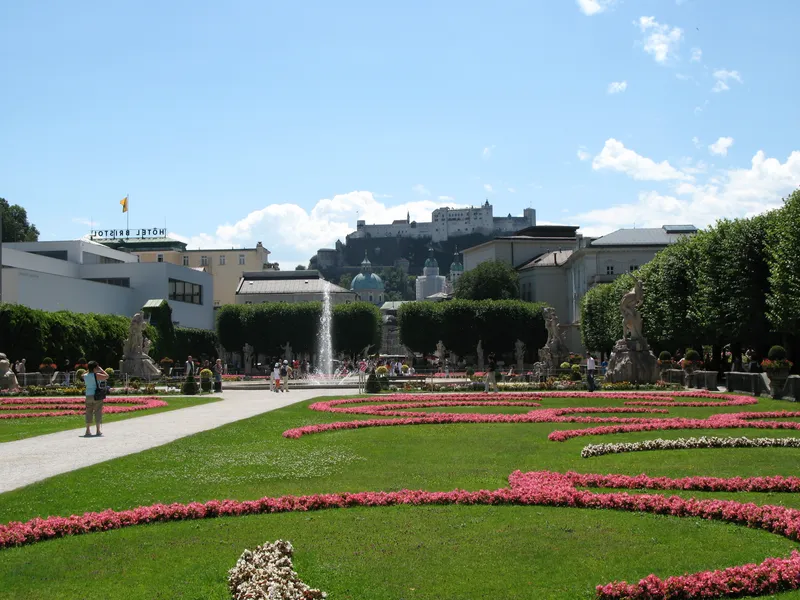
- ✓The formal Baroque parterre is laid out so its central axis points straight across the river at Hohensalzburg Fortress — the city's most photographed garden view.
- ✓Mirabell was built in 1606 by Prince-Archbishop Wolf Dietrich for Salome Alt; the gardens were redesigned in their present Baroque form around 1690.
- ✓The Pegasus Fountain and the terraced steps featured in the 'Do-Re-Mi' sequence of The Sound of Music.
- ✓The gardens are free and open daily; the Marble Hall inside the palace hosts intimate Mirabell concerts.
- ✓Go at opening time to have the parterre almost to yourself before the tour groups arrive.
The garden that frames the fortress
Mirabell is the right bank's grand set piece: a formal Baroque garden of clipped hedges, splashing fountains and mythological statues, arranged so that the long central axis lines up perfectly with Hohensalzburg Fortress across the Salzach. Stand at the top of the parterre and the whole composition snaps into place — flowerbeds, the Pegasus Fountain, the river you cannot quite see, and the castle crowning the hill beyond. It is the postcard Salzburg sells itself on, and it is one of the few headline sights that is entirely free and open to the air.
The gardens reward an unhurried wander rather than a checklist. Beyond the main parterre you'll find the Dwarf Garden with its squat marble figures, a hedge theatre clipped from greenery, the rose garden along the western edge, and quiet benches where locals read in the sun. It is beautiful at any hour, but quietest just after it opens and loveliest in the soft, low light of early evening, when the parterre empties and the fortress catches the last of the sun.
A palace built for love, and the history behind it
Mirabell carries one of Salzburg's more romantic origin stories. The palace was built in 1606 by Prince-Archbishop Wolf Dietrich von Raitenau for Salome Alt, the woman he loved and with whom he had a large family despite his clerical vows. He named it Altenau after her; a later archbishop renamed it Mirabell, from the Italian for 'beautiful view' — a fitting upgrade given what the gardens look out on. The grounds were reshaped into their present formal Baroque layout around 1690, to designs associated with the great architect Johann Bernhard Fischer von Erlach.
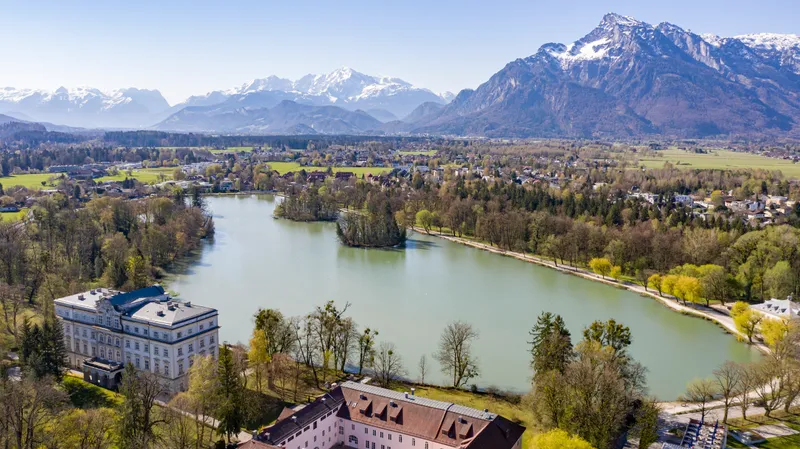
The palace you see today is largely an early-19th-century rebuilding after a fire, but two interiors survived and are worth seeking out. The Marble Hall — once a banqueting room where the young Mozart is said to have performed — is among the most elegant small concert spaces in Europe and is still used for weddings and chamber concerts. The Angel Staircase, a sweeping Baroque flight ornamented with cherubs by Georg Raphael Donner, is freely accessible when the building is open and is one of the loveliest stairwells in the city.
The Sound of Music corner
Mirabell is the single best in-city stop for Sound of Music fans, because several beats of the 'Do-Re-Mi' montage were filmed right here. Maria and the children dance around the Pegasus Fountain, weave past the marble dwarfs and the rows of statues, and finish the song bounding up the terraced steps at the western end of the gardens, with the fortress rising behind them. Unlike the gazebo or the lake villa, none of this needs a tour or a drive — it is free, central and walkable from anywhere in the Neustadt.
If you want the film moments without the singing crowds, come early. By mid-morning in summer the steps and the fountain attract a steady rotation of tour groups recreating the scene, which is charming once and tiresome if you were hoping for a quiet photo. The gardens absorb crowds well overall, but these two spots are the pinch points.
When to go, and timing it with a concert
The gardens are open daily and free, with no ticket and no fixed closing barrier in the way a museum has — though the formally planted parterre and some sections keep seasonal hours, and the flowers are at their fullest from late spring into early autumn. The honest advice is to treat opening time as the magic window: arrive soon after the gates open and you can have the parterre, the fountain and the steps almost to yourself, with the fortress lit by morning sun. Early evening is the romantic alternative, quieter than midday and gorgeous in the golden hour.
To make an evening of it, pair the gardens with a Mirabell concert in the Marble Hall, where small ensembles play Mozart and his contemporaries in the room itself. The concerts are ticketed and run on a published schedule that varies through the year, so book ahead and confirm dates and times through official channels rather than assuming. A stroll through the floodlit gardens before or after the music is one of the easiest elegant evenings in Salzburg.
- Gardens: free, open daily, no ticket — best just after opening or in the early evening.
- Flowers: fullest from late spring through early autumn; the parterre is replanted seasonally.
- Marble Hall concerts: ticketed, scheduled through the year — book ahead and verify dates.
- Photo pinch points: the Pegasus Fountain and the western steps draw the Sound of Music crowds by mid-morning.
Getting there and combining it with the right bank
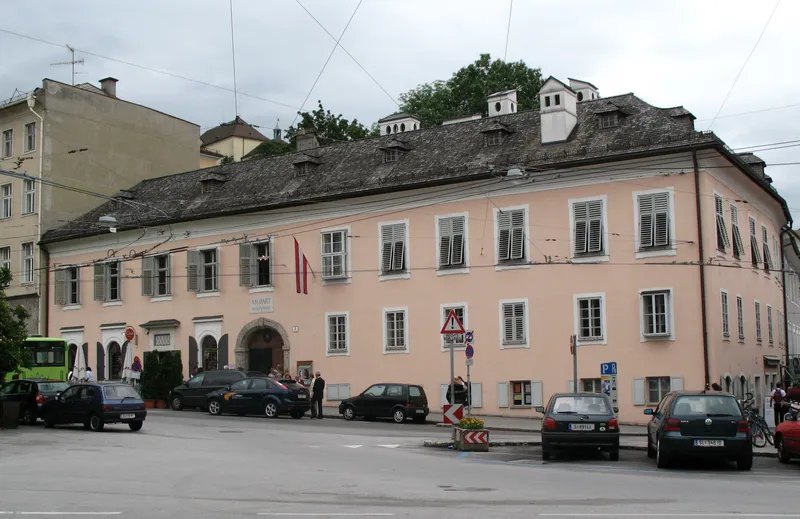
Mirabell sits on the right (north) bank of the Salzach in the Neustadt, an easy walk from the Old Town across the Makartsteg or Staatsbrücke, and a short walk or bus ride from Salzburg's main railway station. That position makes it the natural anchor for a right-bank afternoon: the Mozart Residence on Makartplatz is minutes away, the Mozarteum and Marionette Theater are close by, and Linzergasse's shops and cafés run east from there toward the Kapuzinerberg.
Because it is free and central, Mirabell slots into almost any itinerary — first thing before the Old Town fills up, last thing as the light softens, or as the calm green counterpoint to a busy day of churches and museums. If you are crossing on the Makartsteg, the love-lock bridge gives you a second classic fortress-and-river photo on the way.

Related guides
Sound of Music Filming Locations
An honest, location-by-location guide to where The Sound of Music was really filmed in and around Salzburg — Mirabell, Nonnberg, Leopoldskron, Hellbrunn, Residenzplatz and Mondsee — and which stops are walkable versus a drive.
Read guide
Neustadt & Mirabell Guide
A polished, calmer base on the right bank — Mirabell Gardens, the Mozart Residence, the Mozarteum and Marionette Theater, easy station links, cafés and river walks across the Makartsteg.
Read guide
Romantic Things to Do in Salzburg
The best soft, scenic moments for couples in Salzburg — gardens at dawn, river walks, fortress views, palace concerts, coffeehouse afternoons and an easy lake escape, with practical timing for each.
Read guideMore in Things to Do
6
Best Museums in Salzburg
Choose Salzburg museums by interest, weather, Mozart focus, family fit and Salzburg Card value.
Read guide
Best Photo Spots in Salzburg
Fortress views, Mirabell, Old Town lanes, river bridges, Mönchsberg, blue hour and Christmas lights.
Read guide
Best Salzburg Tours
When to book walking, Mozart, Sound of Music, food, fortress, bike and day-trip tours — and when to skip a tour and just wander.
Read guide
Best Things to Do in Salzburg
A ranked first-trip shortlist of the best things to do in Salzburg — what to book, what is free, and how to group the city so you never backtrack.
Read guide
Best Viewpoints in Salzburg
Fortress, Mönchsberg, Kapuzinerberg, Humboldtterrasse, Untersberg, rooftops and river views ranked by effort.
Read guide
Best Walking Tours in Salzburg
Which Salzburg walking tour fits your time, interests, mobility, music focus and budget — from free group walks to private guides.
Read guide