Salzburg Festival Hotels
Where to stay for the Salzburg Festival — venue walking distance, intermission and late-dinner timing, luxury and budget picks, and the booking windows that decide whether you get a room at all.

Photo: Michael Hamments / Unsplash
- ✓The Salzburg Festival runs across late July and August, when the whole Festspielhäuser complex on Hofstallgasse becomes the centre of the city — and hotel demand peaks for the year.
- ✓For the classic Festival experience, the closer you sleep to the Old Town's left bank, the easier the evening: you can walk to the Großes Festspielhaus, the Haus für Mozart and the Felsenreitschule in minutes.
- ✓Jedermann plays open-air on Domplatz, the cathedral square, so a left-bank base puts you steps from the most atmospheric ticket in town.
- ✓Festival nights run late and dinners run later — a short walk home matters far more in August than in any other month.
- ✓Book months ahead. Festival weeks are the single hardest time to find a room in Salzburg, and the best-located hotels go first.
At a glance
The quick orientation for a Festival stay — the steady facts, with a flag on what to confirm against the current programme.
- When it is: the main Salzburg Festival (Salzburger Festspiele) runs from late July into the end of August each summer; exact dates shift year to year, so check the official programme.
- The venue cluster: the Großes Festspielhaus, the Haus für Mozart and the Felsenreitschule all sit together on Hofstallgasse, carved into the Mönchsberg at the western edge of the Old Town.
- Best base for walkers: the left-bank Altstadt and its fringes — closest to the halls, the cathedral square and the after-show restaurants.
- Calmer alternative: the Neustadt around Mirabell, an easy flat walk across a footbridge, quieter and often a touch better value.
- Book ahead: Festival weeks sell out hotels earliest of any season; secure a room far in advance and confirm cancellation terms.
- Verify before you go: this year's exact Festival dates, performance start times and any dress expectations for premieres — all change annually, so check the official source.
Why where you sleep changes a Festival trip
For eleven months of the year, choosing a Salzburg hotel is a gentle matter of taste — Old Town atmosphere against station convenience, a river view against a quiet courtyard. In Festival season the calculation hardens. From late July into August the city fills with opera-goers, the Festspielhäuser blaze every night, and the squares stay busy past midnight. Hotel prices climb to their annual peak, the best-placed rooms vanish first, and the single thing that most shapes your evenings is how far you have to travel between your bed and a black-tie performance.
The reason is rhythm. A Festival night is long: an apéritif before the curtain, a major opera or drama that can run well past ten, a champagne intermission on the Karl-Böhm-Saal terrace, then a late supper while the kitchens are still open. By the time you are walking home it is often near midnight, frequently warm, occasionally raining, and you are quite possibly in evening dress. A ten-minute stroll back through the lamplit Old Town is a pleasure; a cross-city taxi hunt in formal shoes is not. This guide is built around that simple truth — proximity is the luxury that matters most in August.
The venue cluster and what 'close' really means
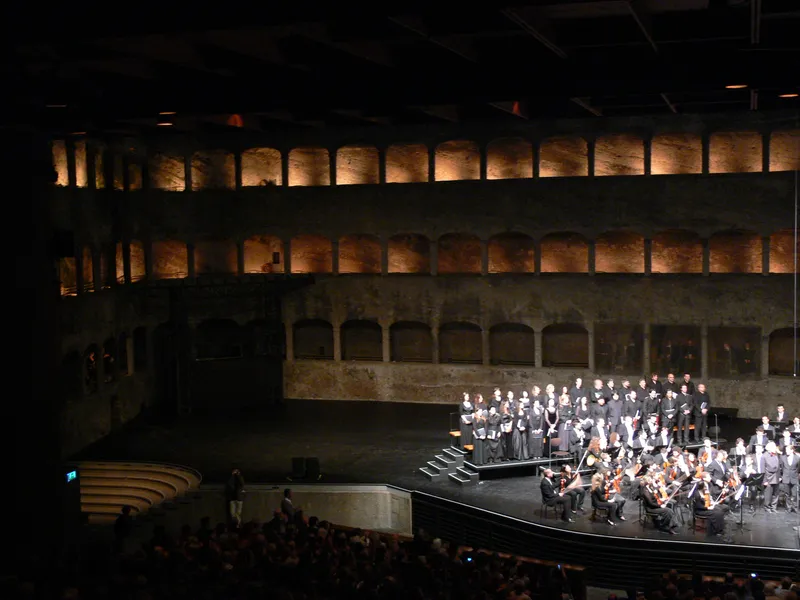
The Festival's main stages are not scattered across the city — they are bundled together at the western end of the Old Town along Hofstallgasse, in the former court stables built into the Mönchsberg cliff. The Großes Festspielhaus, the Haus für Mozart and the spectacular open-arched Felsenreitschule share this one short street, with the Universitätskirche and Universitätsplatz market a step away. That concentration is what makes the left bank such a natural Festival base: from a hotel near Getreidegasse, Sigmund-Haffner-Gasse or the cathedral squares you can be at any of the three halls in well under ten minutes on foot, with no traffic, no funicular and no fuss.
Jedermann — the Festival's signature morality play — is staged in the open air on Domplatz, the cathedral square itself, weather permitting. If that is on your wish list, a left-bank room is doubly valuable: you can stroll to your seat, and if rain forces the performance indoors at short notice you are close enough to adapt. The other historic venues, churches and concert halls used through the season are nearly all within the same compact Old Town footprint, so a central base rarely leaves you stranded.
Treat 'walking distance' as the key filter. Salzburg's Old Town is small enough that a great many hotels qualify, but the cobbles, the river crossings and the late hour all add friction. When you compare rooms, picture the walk home at half past eleven in your good shoes, and weight your choice accordingly.

Left bank versus Mirabell — the two best Festival bases
Two areas stand out for Festival-goers, and the choice between them is mostly atmosphere against value. The left-bank Altstadt — the warren around Getreidegasse, the cathedral squares and up toward the fortress — is the most romantic and the most convenient, putting you inside the Festival's own neighbourhood. You wake among the marble squares, you walk to the halls, and the after-show city is on your doorstep. The trade-offs are real: cobbled lanes, the occasional flight of steps, limited car access and the highest prices of the year. For couples and music lovers who want to live the Festival, it is worth every euro.
The Neustadt around Mirabell, on the right bank, is the smart alternative. It is a flat, polished, slightly quieter district, a short walk from the main railway station and only a footbridge from the Old Town — the Makartsteg or the Staatsbrücke drops you minutes from Hofstallgasse. Hotels here are often a touch more spacious, a shade better value, and easier to reach with luggage or a car, while still leaving you within an easy stroll of every venue. For families, for travellers arriving by rail, or for anyone who finds the Old Town too dense in high season, Mirabell is frequently the better-judged base.
Either way, the river is your friend in August. The Salzach footbridges make the two banks feel like one neighbourhood, and a walk home along the water after a performance — fortress floodlit above, the current dark below — is one of the quiet pleasures of a Festival trip that no taxi can give you.


Luxury, mid-range and budget in Festival season
At the top end, Salzburg's grand hotels lean into the Festival — riverside landmarks and historic houses on both banks that have hosted singers, conductors and audiences for generations. Expect spa floors, fine restaurants that keep Festival hours, and concierge teams who understand the rhythm of an opera night. These are the rooms that sell out first and cost the most in August; if a grand Festival splurge is the point of the trip, reserve as early as the calendar allows. Our luxury guide sets out what each tier of grand hotel actually delivers.
The middle of the market is broad and dependable: comfortable three- and four-star houses across the Old Town and Neustadt, many in handsome historic buildings, that give you a good location without the grandest price. In Festival weeks even these climb well above their off-season rates, so book early and watch cancellation terms. At the budget end, the honest move is to step slightly out — toward the station fringes, Elisabeth-Vorstadt or the residential districts — and accept a short bus ride or a longer walk in exchange for a room you can afford. Salzburg is compact enough that 'a little further out' rarely means inconvenient, and an evening walk back across the river can become part of the experience.
Whatever the budget, the universal Festival rule is the same: book far ahead. Rooms are scarcest and dearest in these few weeks of any year, and the combination of good location and good value disappears earliest of all. Treat the hotel as something to lock in the moment your tickets are confirmed.
Beyond walking distance — quieter and cheaper Festival bases
Not everyone can, or wants to, pay the left bank's August premium, and there are sound reasons to look a little further out. The residential districts ringing the centre, the area toward the main station, and the green pockets out by Leopoldskron all offer rooms that cost less and stay calmer through the loud high-season nights — useful if you are at the Festival for a couple of headline performances rather than every evening, or if you are travelling with family and want quiet after the children are asleep. The Mönchsberg and the river separate these areas from the venue cluster, so you accept a bus ride or a longer walk in exchange for the saving.
The key, if you base yourself out, is to plan the late return deliberately. Festival performances finish late and bus frequencies thin out in the evening, so know your night-time options before the curtain falls: which bus still runs, where the taxi ranks are, or whether a pre-booked car makes sense for a premiere night. Drivers find parking far easier away from the centre, which is a genuine advantage of an outer base. For one or two big nights this works well; for a stay built around back-to-back performances and late suppers, the comfort of walking home from the halls usually justifies paying to be central. Match the base to how many late Festival evenings you actually have planned.

Booking, dining and timing your evenings
The Festival reshapes more than the hotels. Restaurants near the venues book up for the pre- and post-performance windows, so reserve a table the moment you have your curtain time, and ask whether the kitchen serves late — many Old Town restaurants extend their hours for the season, but not all. A short walk between hotel, hall and table is what lets you string the evening together without stress: apéritif, performance, intermission, supper, stroll home. Plan those distances as deliberately as you plan the programme.
Practicalities worth confirming for your dates: this year's exact Festival period and individual start times, whether any premieres carry a formal dress expectation, and how late the public transport and your hotel's restaurant actually run. Overnight guests in the city receive a Guest Mobility Ticket for regional transport, which is separate from the sightseeing-focused Salzburg Card — useful for arrivals and day trips around the Festival, though for the performances themselves you will almost always be on foot. None of this needs to be stressful; it simply rewards being booked early and based well.
Once the room and the table are secured, the rest is pleasure. A Festival night in Salzburg — the lit façades, the well-dressed crowds drifting to Hofstallgasse, the fortress floating above it all — is one of the great experiences in European culture, and choosing the right hotel is what turns a logistical scramble into an effortless, romantic evening.


Related guides

Salzburg Festival Guide
The complete first-timer's guide to the Salzburg Festival — when it runs, the venues, how tickets work, what to wear, dinner timing, the free screens and a strategy for getting the most from a Festival trip.
Read guide
Luxury Hotels in Salzburg
Grand riverside landmarks, palace stays, Festival splurges, spa floors and discreet luxury bases — how Salzburg's top hotels differ, and how to choose by view, location and the kind of evening you want.
Read guide
Where to Stay in Salzburg
Decisive, area-by-area advice on where to sleep in Salzburg — the Altstadt, Mirabell and the Neustadt, the station area, quiet Nonntal and Riedenburg, and lakeside Leopoldskron — for first-timers, couples, families, budget travellers, Festival nights and the Christmas markets.
Read guideMore in Where to Stay
6
Accessible Hotels in Salzburg
How to choose a Salzburg hotel for step-free access and easy routes — why the cobbled Old Town is the hard part, where the smoother bases are, and the practical questions to ask before you book.
Read guide
Best Area to Stay in Salzburg (First Time)
A decisive first-timer's guide to choosing where to stay in Salzburg — comparing the Altstadt, the Neustadt around Mirabell, the station area, quiet Nonntal and Riedenburg, and lakeside Leopoldskron — with one clear recommendation and the honest trade-offs behind it.
Read guide
Best Hotels in Salzburg
How to choose the best hotel in Salzburg for your trip — curated by area, by romance, by Festival-season logistics, by train access, by family needs, and across luxury and budget — so you match the right base to the way you actually want to travel.
Read guide
Boutique Hotels in Salzburg
Characterful small hotels, design-led stays and restored townhouses — what 'boutique' really means in Salzburg, how the neighborhoods differ, and how to pick a romantic, individual base over a chain.
Read guide
Budget Hotels in Salzburg
Value areas, the station trade-offs, hostels, guesthouses and apartments — how to sleep affordably in Salzburg without losing the walk to the Old Town, and how to lower the cost of the whole trip.
Read guide
Family Hotels in Salzburg
Where families should stay in Salzburg — space and connecting rooms, a real breakfast, flat walks and transit, and easy reach to Hellbrunn, the fortress, the zoo and the Old Town with kids.
Read guide