Salzburg Festival Guide
The complete first-timer's guide to the Salzburg Festival — when it runs, the venues, how tickets work, what to wear, dinner timing, the free screens and a strategy for getting the most from a Festival trip.

Photo: Flocci Nivis / Wikimedia Commons · CC BY 4.0
- ✓The Salzburg Festival (Salzburger Festspiele) runs from late July into the end of August each year — roughly six weeks of opera, drama and orchestral concerts.
- ✓It was founded in 1920 by Max Reinhardt, Hugo von Hofmannsthal and Richard Strauss, and is one of the world's foremost festivals of classical music and theatre.
- ✓The main stages — the Großes Festspielhaus, the Haus für Mozart and the Felsenreitschule — sit together on Hofstallgasse at the western edge of the Old Town.
- ✓Jedermann, the festival's morality play, is staged open-air on Domplatz in front of the cathedral, weather permitting.
- ✓Demand is intense: book tickets, hotels and restaurant tables as far ahead as you can, and always verify this year's exact dates and prices on the official source.
At a glance
The quick orientation for a Festival trip — the steady facts that hold from year to year, with a clear flag on what to confirm against the current programme.
- When: late July to the end of August, every summer; exact opening and closing dates shift annually, so check the official programme.
- What: opera, drama and orchestral and chamber concerts, plus the open-air Jedermann on Domplatz.
- Where: the Großes Festspielhaus, the Haus für Mozart and the Felsenreitschule on Hofstallgasse, with the cathedral, churches and other Old Town venues used too.
- Tickets: sold through the official Salzburg Festival box office; popular performances sell out early, so order as soon as sales open.
- Dress: evening or smart dress is the norm, especially for opera and premieres — there is no hard rule, but the audience dresses up.
- Free option: the Festival also offers free open-air screenings of selected performances on a public square (see the dedicated guides).
- Verify before you go: this year's exact dates, full programme, ticket prices and on-sale windows — all change annually.
What the Salzburg Festival is, and why it matters
The Salzburger Festspiele is the most prestigious thing Salzburg does, and one of the most important festivals of opera and classical music in the world. It was founded in 1920, in the difficult years after the First World War, by the theatre director Max Reinhardt, the poet and playwright Hugo von Hofmannsthal and the composer Richard Strauss — three men who imagined a festival that would unite drama, opera and music in the Baroque city that had given the world Mozart. More than a century later that vision still runs the show: across roughly six weeks of high summer, the greatest conductors, orchestras, singers and directors of the moment gather in one small Alpine town.
For a visitor, this is what gives a Salzburg summer its particular charge. The performances are world-class and the setting is unmatched — opera in halls carved into the Mönchsberg cliff, drama staged against a floodlit cathedral. But the Festival also transforms the city itself: hotels run at their annual peak, the squares fill with audiences in evening dress, and the whole Old Town tilts toward the rhythm of curtain times and late suppers. Coming for the Festival is a different trip from coming for the sights, and this guide is built to help you do it well.

The venues — one short street, three great halls
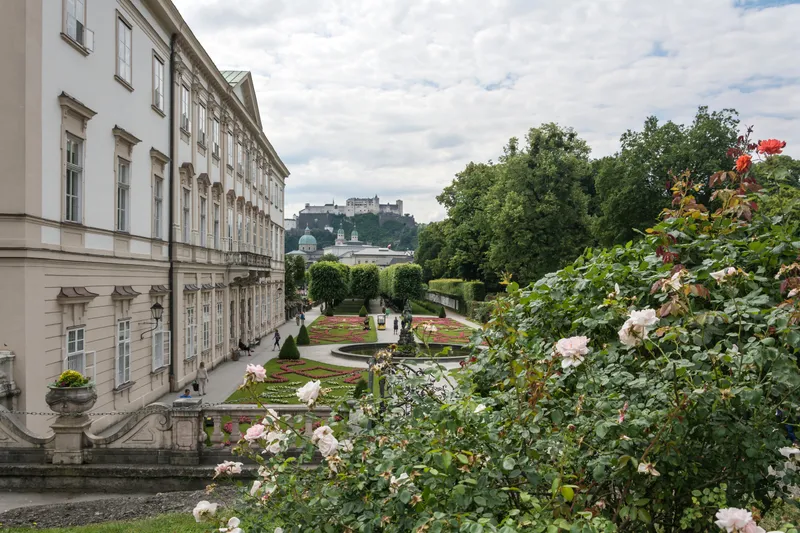
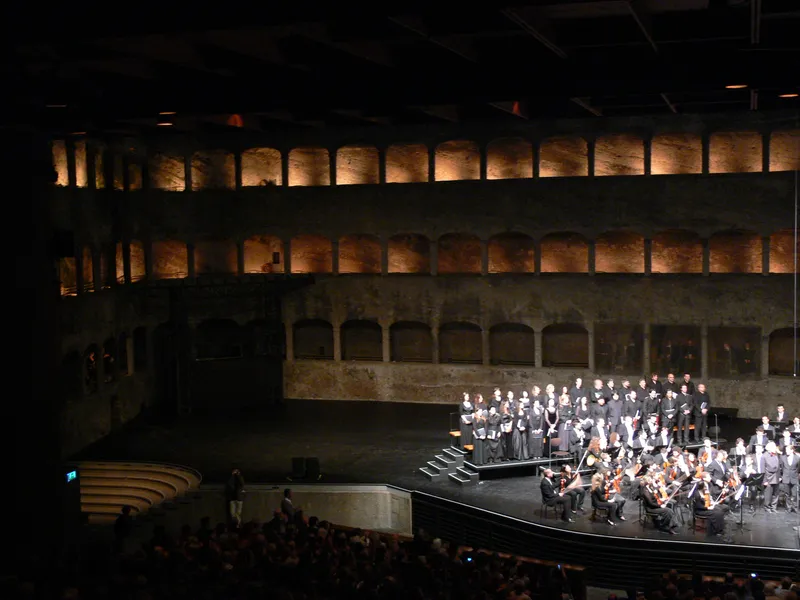
The Festival's main stages are not scattered across Salzburg; they are bundled together at the western end of the Old Town along Hofstallgasse, in and around the former court stables built into the Mönchsberg. The Großes Festspielhaus is the grand opera house, with one of the widest stages in the world. The Haus für Mozart is the more intimate hall next door, ideal for Mozart and chamber-scale opera. And the Felsenreitschule — the old riding school, with its tiers of arcades cut straight into the rock face — is the most theatrically spectacular of the three, and the one that most takes a first-timer's breath away.
Beyond this cluster, the Festival spreads into the fabric of the city: the cathedral square for Jedermann, churches such as the Kollegienkirche for sacred and contemporary works, and the Mozarteum's concert halls across the river for orchestral and chamber programmes. The great convenience for visitors is that nearly everything is walkable from a central base — from a left-bank hotel you can be at any main venue in minutes, on foot, with no traffic and no fuss. That concentration is the single best argument for sleeping in or beside the Old Town during the Festival.
Tickets — how it works and how to plan
Tickets are sold through the official Salzburg Festival box office, with an annual cycle: the programme is announced in advance, an ordering window opens, and demand for the headline opera premieres and star conductors is fierce. The practical rule is simple — decide what you want as soon as the programme appears, and order the moment sales open. Prices span a very wide range, from costly premium opera seats to much more affordable places for concerts and drama, so the Festival is not only for the well-heeled; there are genuinely accessible options if you are flexible about what you see.
If the performance you want is sold out, do not give up. Official returns can appear close to the date, the box office sometimes releases seats, and there are legitimate resale channels — though you should be wary of unofficial touts and inflated prices. The free open-air screenings are a wonderful fallback that needs no ticket at all. Because the details of pricing, ordering and availability change every year, the dedicated tickets guide below carries the current mechanics, and you should always confirm against the official source for your dates.

What to wear and how to time the evening
There is no enforced dress code, but the Salzburg Festival is one of the last great occasions in Europe where the audience genuinely dresses for the theatre. For opera and premieres, expect dark suits and cocktail or evening dresses; dirndls and lederhosen — proper Tracht — are entirely at home and worn with pride. Concerts and drama are a touch more relaxed but still smart. You will never feel overdressed at the Festspielhaus; you can feel underdressed. Pack accordingly, and remember that even a warm August evening cools after a late finish, so bring a wrap.
Timing the evening is part of the art. A classic Festival night runs long: an apéritif before the curtain, a major work that can finish well past ten, a champagne intermission on the terrace overlooking the city, then a late supper while the Old Town kitchens are still open. Restaurants near the venues book out for the pre- and post-performance windows, so reserve your table the moment you have a curtain time, and ask whether the kitchen serves late — many extend their hours for the season, but not all. A short walk between hotel, hall and restaurant is what lets you string it all together without stress.
Common questions
When does the Salzburg Festival take place? Each summer from late July to the end of August, running about six weeks. The exact opening and closing dates change annually, so confirm them on the official programme before booking travel.
Do I need a ticket for everything? For the performances, yes, and the best sell out early — but the Festival also offers free open-air screenings of selected works on a public square, which need no ticket and are a lovely way to share the atmosphere on a budget.
Is there a dress code? Not a formal one, but the audience dresses up, especially for opera and premieres. Smart or evening dress is the norm; Tracht is welcome. Aim to look the part and you will feel at ease.
Where should I stay? As close to the Old Town and Hofstallgasse as your budget allows, so the late walk home is short and easy. Festival weeks are the hardest of the year for rooms, so book far ahead.
Can I see anything for free? Yes — the open-air screenings are the headline free experience, and simply being in the city during the Festival, among the lit façades and dressed-up crowds, is an event in itself.

Related guides

Salzburg Festival Tickets Guide
How tickets for the Salzburg Festival actually work — the ordering cycle, where to buy, availability, prices, venues, returns and the free alternatives if a performance is sold out.
Read guide
Salzburg Festival Hotels
Where to stay for the Salzburg Festival — venue walking distance, intermission and late-dinner timing, luxury and budget picks, and the booking windows that decide whether you get a room at all.
Read guide
Salzburg Festival Itinerary
How to build a trip around the Salzburg Festival — booking ahead, shaping the day around performances, balancing opera and drama with sightseeing, choosing meals and a hotel, and pacing in rest so the culture lasts.
Read guideMore in Events
6
Hellbrunn Advent Market guide
A guide to the Hellbrunn Advent Market at Schloss Hellbrunn — its fairy-tale palace setting, family features, how to get there on bus 25, and how to pair it with the city Christmas markets.
Read guide
Jazz & The City Salzburg
How to plan a trip around Jazz & The City — Salzburg's free autumn jazz festival that turns the whole Old Town into a stage for several October days, with the venues, timing, hotel and nightlife strategy to make the most of it.
Read guide
Mozart Week Salzburg guide
Plan Salzburg's winter Mozart festival — what Mozart Week (Mozartwoche) is, its January timing around the composer's birthday, the concerts and museums, and how to organise a cold-weather trip.
Read guide
New Year in Salzburg
How to spend New Year's Eve and New Year's Day in Salzburg — where to stay, where to dine, where to gather for the turn of the year, how to move around, and what's open and closed over the festive turn, with a romantic and practical plan for the trip.
Read guide
Rupertikirtag Salzburg
How to visit the Rupertikirtag — Salzburg's traditional autumn fair around the cathedral squares, held for the feast of the city's patron saint — with what to expect from the rides, food, beer and crowds, and how to time it.
Read guide
Salzburg Advent Singing
How to plan a visit to the Salzburger Adventsingen — the city's landmark Advent Singing — with what the event is, where it's staged, how it fits the Christmas markets and where to stay in December.
Read guide