Mozart's Birthplace Guide
Tickets, rooms, exhibits, accessibility limits, Getreidegasse context and who should plan a visit to the house where Mozart was born.
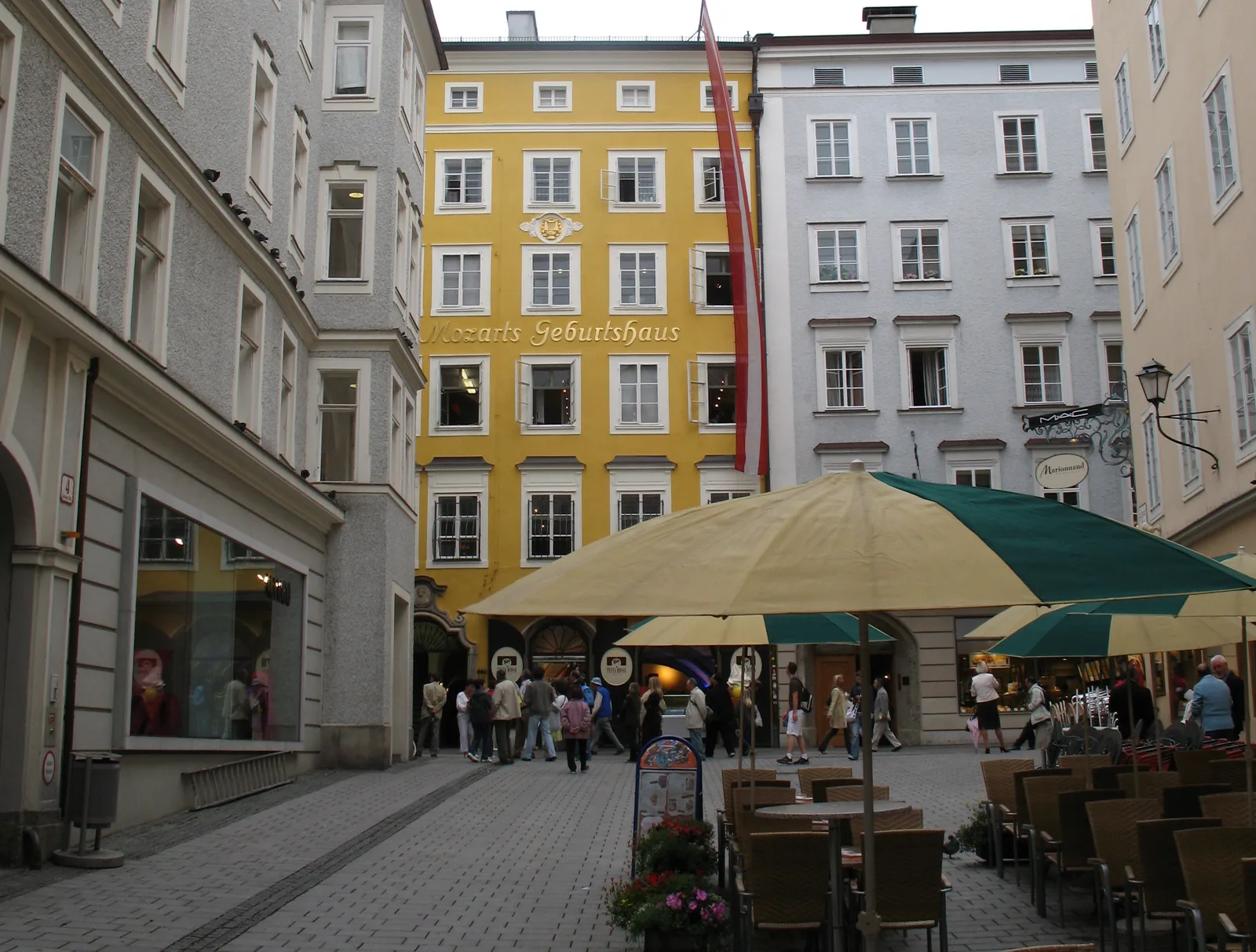
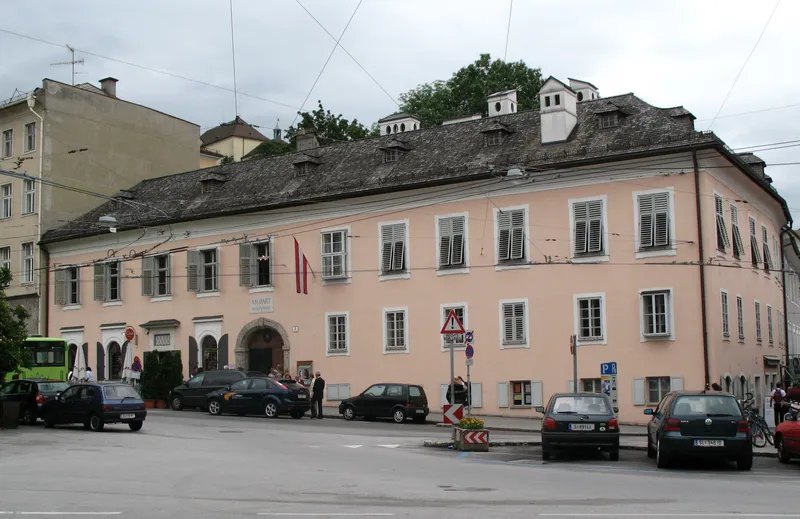
Photo: Andrew Bossi / Wikimedia Commons · CC BY-SA 2.5
- ✓Wolfgang Amadeus Mozart was born here at Getreidegasse 9 on 27 January 1756; the family lived on the third floor for some twenty-six years.
- ✓Open as a museum since 1880, run by the Internationale Stiftung Mozarteum — among the oldest composer house-museums anywhere.
- ✓The collection includes Mozart's childhood violin, portraits, letters and original instruments from the family's rooms.
- ✓It is a vertical, historic house: steep stairs, small rooms and no lift — a real limit for anyone with mobility needs.
- ✓A combined ticket links the Birthplace with the later Mozart Residence across the river; the Salzburg Card may include entry — verify before you buy.
The house where it all began
Getreidegasse 9 — the cheerful yellow Hagenauer Haus on Salzburg's most famous lane — is where Leopold and Anna Maria Mozart raised their family, and where their youngest surviving child, Wolfgang Amadeus, was born on 27 January 1756. The Mozarts rented rooms on the third floor of this merchant's house for around twenty-six years, and it was here that the most celebrated childhood in music began. The Internationale Stiftung Mozarteum has run the building as a museum since 1880, which makes it not only a place of pilgrimage but one of the oldest house-museums devoted to any composer.
For most visitors, the Birthplace is the single must-do of the Mozart trail. It is small, it is busy, and it asks for an unhurried hour rather than a quick photo — but standing in the actual rooms where a six-year-old prodigy practised, then setting that against the city outside the windows, is a genuinely moving way to understand him as a person rather than a brand on a chocolate ball.
At a glance
The Mozart museums adjust hours and prices seasonally; the figures below are the ones worth knowing in advance, with anything time-sensitive flagged to verify on the official Mozarteum site before you go.
- Address: Getreidegasse 9, Old Town (left bank).
- Operator: Internationale Stiftung Mozarteum (Mozart Museums Salzburg).
- Open: daily, year-round, with extended summer hours and shorter winter hours — verify exact times.
- Tickets: single-house ticket, or a combined ticket with the Mozart Residence; reduced rates for children, students and seniors — verify current prices.
- Salzburg Card: admission is commonly included; confirm on the current card terms before buying a separate ticket.
- Time needed: about 45–60 minutes.
- Accessibility: historic vertical house with steep stairs and no lift — not suitable for wheelchairs or those who can't manage several flights.
- Best time: first thing at opening, before tour groups and cruise-day crowds arrive.
What you actually see inside
The museum spreads across the floors the family knew and the rooms above. The emotional centre is the set of historic family rooms, presented with original furnishings and the instruments the Mozarts owned — most famously Wolfgang's childhood violin and a clavichord, alongside the family's keyboard instruments. These are the objects that turn an abstract genius into a real boy: small instruments for small hands, in modest rooms with a working family's clutter.
Around them, the exhibition tells the story in portraits, letters and documents — the famous family portraits, the correspondence that reveals Leopold the ambitious father and Wolfgang the restless talent, and material on the grand European tours that paraded the children before the courts of Europe. Upper floors add context on Mozart and the theatre, with models, costumes and scenery evoking his operas. It is a layered visit: part shrine, part archive, part stagecraft.
Birthplace or Residence — or both?
Salzburg has two Mozart houses, and first-timers understandably confuse them. The Birthplace on Getreidegasse is where he was born and spent his childhood; the Mozart Residence on Makartplatz, across the river, is the larger, lighter apartment the family moved to in 1773 and lived in through Mozart's young adulthood. The Birthplace is the more atmospheric and the more famous; the Residence is roomier, more modern in presentation and quieter.
If you only have time and budget for one, choose the Birthplace for the emotional hit of the actual room. If you are a serious enthusiast — or simply want the fuller story — buy the combined ticket and do both, ideally with the river walk between them as a breather. The two houses are a comfortable fifteen-to-twenty-minute stroll apart across one of the pedestrian bridges.
Tickets, the Salzburg Card and timing
Tickets are sold at the door, and a combined Birthplace-plus-Residence ticket usually works out cheaper than two singles if you plan both. Reduced rates apply to children, students and seniors, and there are family options — confirm the current structure on the Mozarteum's website, as the museums revise prices periodically. The Salzburg Card frequently includes entry to both houses as part of its one-time free admissions, which can make it the better buy if you are sightseeing intensively; check the card's current inclusions rather than assuming.
Timing is everything here, because the house is small and the street outside is one of the busiest in the city. Arrive at opening to walk the rooms before the first tour groups; by late morning in season the staircases can back up. If you are also visiting the fortress and the cathedral squares, fold the Birthplace into the same left-bank morning — it is a two-minute walk from Mozartplatz and its statue.

Accessibility and who should visit
Be honest with yourself about the stairs. This is a tall, historic merchant's house, and the visit climbs through several floors on steep, narrow staircases with no lift. For wheelchair users, anyone with a heart or mobility condition, or families with a stroller, the Birthplace is difficult-to-impossible; the Mozart Residence across the river is the more accessible of the two houses and may be the better choice. If steps are no obstacle, the Birthplace is the richer experience.
Who gets the most from it? Music lovers and Mozart devotees, obviously, but also anyone who wants the human story behind the postcards — the cramped rooms, the family tensions in the letters, the child-sized violin. Casual visitors short on time can still get the essence in three-quarters of an hour. Children old enough to be curious about the prodigy who was their own age usually find the instruments and tour-stories engaging.
Questions visitors ask
A few recurring questions, answered plainly. Is the Birthplace the same as the Mozart Residence? No — the Birthplace is the Getreidegasse childhood home; the Residence is the later, larger apartment on Makartplatz. Do I need to book ahead? Generally no for individuals; you buy at the door, though in peak Festival and Advent weeks arriving early avoids queues. Is photography allowed? Policies vary and can restrict flash or photography in certain rooms — follow the signage on the day.
How long should I budget? Around 45–60 minutes for the Birthplace alone, or a half-day if you combine it with the Residence and the walk between. Is it worth it if I'm not a classical-music person? Yes, if you treat it as social history and a window onto eighteenth-century Salzburg rather than a recital; the rooms and letters carry the visit even without a note of music.
Related guides
Mozart Residence Guide
Visit Mozart's later family home on Makartplatz — the rooms, exhibits, tickets, accessibility and how it compares with the Birthplace.
Read guide
Getreidegasse Guide
Wrought-iron signs, shops, Mozart's Birthplace, hidden courtyards, cafés and how to walk Salzburg's most famous lane without the crush.
Read guide
Mozart in Salzburg
A practical guide to Mozart's Salzburg — the two family houses, the churches and squares, the concerts worth booking and the seasons that matter.
Read guideMore in Mozart & Music
6
Best Mozart Concerts in Salzburg
Compare fortress concerts, Mirabell concerts, dinner concerts, church music and Festival options to find the right Mozart evening.
Read guide
Mozart Dinner Concert Guide
Who should book a Mozart dinner concert in Salzburg, what to expect, dress, menu caveats and the alternatives worth weighing.
Read guide
Salzburg Concerts Guide
Mozart dinners, fortress concerts, Mirabell concerts, cathedral music, Festival options and how to choose the right night for you.
Read guide
Salzburg Festival Venues Guide
Felsenreitschule, Großes Festspielhaus, Haus für Mozart, Domplatz and how venue location shapes your Festival night.
Read guide
Salzburg Marionette Theater Guide
How to visit the historic Salzburg Marionette Theater — family fit, Mozart and Sound of Music productions, tickets and what to expect.
Read guide
Salzburg Music History
A visitor-friendly history of Salzburg's musical identity — the prince-archbishops, cathedral and church music, Mozart, the Mozarteum, the Festival and the city's living concert life.
Read guide