Salzkammergut from Salzburg
How to explore the Salzkammergut lake country from Salzburg — the lakes and villages worth your day, the boats, buses and car routes, and how to choose the right lake-country trip.

Photo: Raimund Schlager / Unsplash
- ✓The Salzkammergut is the UNESCO-listed lake-and-mountain region on Salzburg's doorstep, named for the salt ('Salz') that made it rich — Hallstatt is only its most famous corner.
- ✓Wolfgangsee, Mondsee, Fuschlsee and St Gilgen are the closest, easiest lakes; the Attersee and Traunsee lie further out for a longer day.
- ✓Lake steamers, a cog railway up the Schafberg and pretty pilgrimage villages give the region more than just scenery.
- ✓It's reachable by post-bus and train for non-drivers, but a car or a tour makes looping several lakes in a day far simpler.
- ✓Choose by mood: a single calm lakeside afternoon, a multi-lake driving loop, or Hallstatt plus one neighbour — don't try to do it all.
At a glance
The Salzkammergut is the reason Salzburg feels so close to the wild: a whole region of deep lakes, steep green mountains and salt-rich little towns that begins right at the city's edge. Hallstatt grabs the headlines, but the lake country around it is gentler, quieter and arguably more rewarding for a relaxed day out. Here's how to read it before the detail.
- What it is: the lakes-and-mountains region east and south-east of Salzburg, a UNESCO World Heritage cultural landscape built on salt.
- Closest lakes: Fuschlsee, Wolfgangsee (with St Gilgen and St Wolfgang) and Mondsee — all an easy day from the city.
- Further afield: the Attersee and Traunsee for a longer drive; Hallstatt and the Hallstätter See to the south.
- Highlights: lake steamers, the Schafberg cog railway, the St Wolfgang pilgrimage church, Mondsee's Sound of Music wedding basilica and the spa town of Bad Ischl.
- Getting around: post-buses and trains reach the main villages; a car or tour makes a multi-lake loop far easier.
- Verify: boat and railway seasons, bus timetables and tour availability all change — confirm current details before you travel.
What the Salzkammergut actually is
The name says everything: 'Salzkammergut' means roughly the estate of the salt chamber, the imperial salt domain whose white gold underwrote centuries of Habsburg wealth. Today it's a UNESCO-listed cultural landscape spread across a cluster of lakes and the mountains between them, straddling the borders of three Austrian provinces just east of Salzburg. It is the kind of scenery that made the region the favourite summer retreat of emperors and composers — Bad Ischl was Franz Joseph's beloved spa town, and the lakes have drawn artists and holidaymakers ever since.
For a visitor from Salzburg, the appeal is variety in a small space. Within an hour or so you can be on a lake steamer, riding a cog railway to a mountaintop, lighting a candle in a famous pilgrimage church, or simply sitting at a lakeside café with the mountains mirrored in the water. Hallstatt is the postcard star, but it's also the busiest spot by far; the quieter lakes reward travellers who'd rather trade the famous photograph for an unhurried afternoon. This page helps you pick which slice of the lake country suits your day.
The lakes and villages worth your day
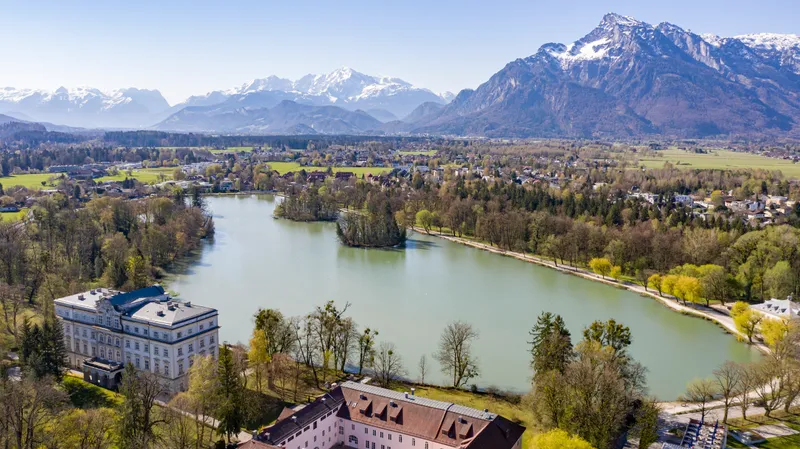
Start with the closest, easiest trio. The Fuschlsee is the nearest lake to Salzburg, small, clear and quiet — a good choice for a short, calm outing. Just beyond it lies the Wolfgangsee, the region's most charismatic lake, ringed by St Gilgen at its western end and the pilgrimage village of St Wolfgang opposite, the two linked by a graceful lake steamer. From St Wolfgang the Schafbergbahn cog railway grinds up to a mountaintop with a vast lake-and-Alps panorama — one of the great views of the eastern Alps when the weather is clear.
Mondsee, closer to Salzburg and easiest of all to reach, gives you a pretty lakeside town and its basilica — the very church where the wedding scene in The Sound of Music was filmed, which makes it a favourite for fans. Further out, the long Attersee and the dramatic Traunsee (overlooked by the Traunstein peak and the little lake castle of Schloss Ort at Gmunden) reward a fuller day for those who want to go deeper. And to the south sits Hallstatt and its lake — the most famous of all, with its own dedicated guide. Pick one or two of these, not the whole list; the joy here is slowness.

Boats, cog railways and a famous church
Part of what lifts the Salzkammergut above a simple scenic drive is the things you can do on and around the water. The lake steamers — most characterfully on the Wolfgangsee, where a historic paddle-steamer still runs — turn a lake from a view into an experience, gliding between villages so you can step off, explore, and catch a later boat back. They run a season, typically the warmer months, so check the timetable before building a day around one.
The Schafbergbahn from St Wolfgang is the region's signature mountain ride: a steam-and-diesel cog railway that hauls you up to a ridge-top hotel and viewpoint surveying a sweep of lakes and peaks. It too is seasonal and weather-dependent, and very popular, so it can sell out on fine summer days — worth reserving ahead. For something gentler, St Wolfgang's pilgrimage church holds a celebrated late-Gothic winged altarpiece by Michael Pacher, and Mondsee's basilica draws a steady stream of Sound of Music pilgrims to its filmed wedding interior. Even Bad Ischl, the imperial spa town, makes a graceful, café-lined stop with its Kaiservilla and its famous Konditorei.

Getting around the lake country
Non-drivers can reach the headline spots without too much trouble. Regional post-buses run from Salzburg out to Mondsee, St Gilgen, Fuschl and the Wolfgangsee, and the rail network plus connecting buses serves the wider region; Bad Ischl and the line toward Hallstatt are reachable by train. The limitation is that linking several lakes in a single day by public transport is slow going — these are rural timetables — so a bus-and-boat plan works best when you pick one lake and settle in rather than trying to hop between several.
A car is the natural way to loop the lakes. The driving here is a pleasure in itself — winding lake roads, mountain passes, villages strung between the water and the slopes — and it lets you string Mondsee, the Wolfgangsee and a viewpoint or two into one unhurried day. Factor in Austria's motorway vignette if you use the Autobahn, and remember that lakeside parking at honeypots fills in season. Tours fill the gap for those who want neither to drive nor to wrestle with timetables: organised Salzkammergut day trips from Salzburg typically loop the prettiest lakes and villages, often pairing them with Hallstatt, and take all the planning off your hands.


How to choose the right lake-country day
The best way to plan the Salzkammergut is to be honest about what you want from the day, then resist the urge to cram. If you want a calm, scenic afternoon with minimal travel, pick one close lake — Fuschlsee or Mondsee — and simply be there: a walk, a swim in summer, a lakeside lunch, a boat if one's running. If you want the region's classic experiences, base your day on the Wolfgangsee, combining the steamer, the Schafberg railway and the village of St Wolfgang into a satisfying loop.
If the famous photograph is the point, go for Hallstatt and read its dedicated guide for the timing that matters most. And if you have a car and a full day, a multi-lake driving loop — say Mondsee, the Wolfgangsee and back via Bad Ischl — gives you the fullest sense of the region. Sound of Music fans will want Mondsee for the wedding church; view-chasers will want the Schafberg on a clear morning; slow travellers will want the quietest lake they can find. Whatever you choose, treat every season, timetable and boat schedule as something to confirm before you go, give the day a single centre of gravity, and let the lake country do what it does best — slow you right down.

Related guides

Hallstatt Day Trip from Salzburg
How to do Hallstatt as a day trip from Salzburg — by train, bus, car or tour, the salt mine and Skywalk, beating the crowds, and whether the village deserves an overnight.
Read guide
Day Trips from Salzburg
The hub for the best day trips from Salzburg — Hallstatt, the Salzkammergut lakes, the Eagle's Nest and Berchtesgaden, Königssee, Werfen's ice caves and a hop into Munich.
Read guide
Salzburg Itineraries
Ready-made Salzburg trip plans for one to four days, weekends, couples, families, music lovers, Festival-goers and Christmas-market visitors — each built outward from the river so you walk smart and never backtrack.
Read guideMore in Day Trips
6
Bad Ischl from Salzburg
How to plan a Bad Ischl day trip from Salzburg — the imperial spa town of the Habsburgs, the Kaiservilla, café culture, the Salzkammergut setting and whether it's worth the detour.
Read guide
Berchtesgaden from Salzburg
How to plan a Berchtesgaden day trip from Salzburg — the alpine old town, the salt mine, the Königssee, the Eagle's Nest and the Obersalzberg's dark history, with buses, trains and tours.
Read guide
Berchtesgaden Salt Mine from Salzburg
How to visit the Berchtesgaden salt mine from Salzburg — getting there across the Bavarian border, the underground tour with its slides and brine lake, how it compares to Hallein, and what to pair it with.
Read guide
Best Day Trips by Train from Salzburg
The easiest rail day trips from Salzburg — Vienna, Innsbruck, Munich, the Salzkammergut lakes and Hallstatt — with station strategy, ticket notes and when a tour beats the train.
Read guide
Best Day-Trip Tours from Salzburg
When a guided tour beats going it alone from Salzburg — for Hallstatt, the Sound of Music country, the Eagle's Nest, Königssee, the Salzkammergut lakes and the salt mines — and how to pick the right one.
Read guide
Best lakes near Salzburg
The best lake escapes within reach of Salzburg — from the easy nearby Mondsee and Wolfgangsee to famous Hallstatt and the wider Salzkammergut — with how to reach each by bus, train, car or tour, and the swim, boat and view tradeoffs.
Read guide