Berchtesgaden Salt Mine from Salzburg
How to visit the Berchtesgaden salt mine from Salzburg — getting there across the Bavarian border, the underground tour with its slides and brine lake, how it compares to Hallein, and what to pair it with.
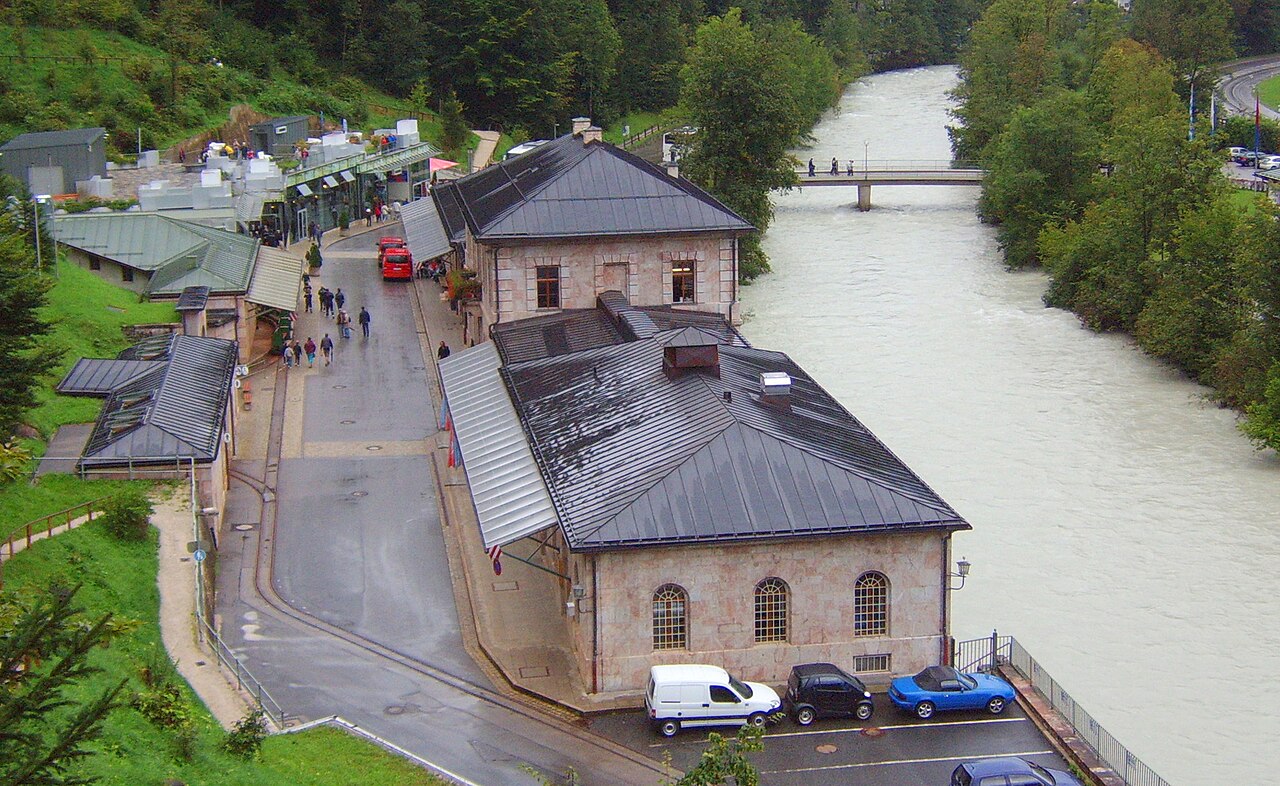
Photo: Nicolai Schäfer / Wikimedia Commons · CC BY-SA 3.0
- ✓The Salzbergwerk Berchtesgaden lies just over the German border, an easy short hop south of Salzburg by bus or car.
- ✓The tour is a proper experience: miners' overalls, a little train into the mountain, wooden slides between levels and a raft across an underground brine lake.
- ✓It tells the same white-gold story as Salzburg itself — the salt that built the city — from the Bavarian side of the same mountains.
- ✓It compares closely with the Hallein salt mine in Austria; pick by language, story emphasis and what else you want to see that day.
- ✓It pairs naturally with Königssee, the Eagle's Nest or the town of Berchtesgaden for a fuller Bavarian day.
Why a Bavarian salt mine belongs on a Salzburg trip
Salzburg's name means 'salt castle', and every dome and marble square in the Old Town was paid for by the white gold floated down the Salzach for a thousand years. The Berchtesgaden salt mine — the Salzbergwerk — lets you go inside that story, descending into the very mountains that made the region rich. It sits just across the border in Bavaria, close enough that it reads as a Salzburg day out rather than a foreign expedition, and it remains a working mine to this day, which gives the underground galleries an authenticity that a museum cannot.
What makes it more than a history lesson is the form of the visit. You change into traditional miners' protective overalls, board a small mine train that rattles deep into the rock, then move between levels on the polished wooden miners' slides — a genuinely fun descent that children and adults both remember. Deep inside, an illuminated underground brine lake is crossed on a slow, lit raft, the still water mirroring the lamps. It is part history, part theme-park ride and entirely real, which is why it ranks among the most rewarding rainy-day and family excursions within reach of Salzburg.


Getting there from Salzburg
Berchtesgaden lies a short distance south of Salzburg, and reaching it without a car is straightforward. The standard public route is by regional bus, which runs across the border to Berchtesgaden's bus and railway station; from there a local connection brings you out to the mine on the edge of town. Drivers have it even simpler, following the road south through the Untersberg's shadow and over the frontier — there is visitor parking at the mine — though border-region traffic and peak-season queues are worth allowing for. Either way it is one of the closer day trips on the whole Salzburg list.
Treat all timings as something to confirm rather than memorise. Cross-border buses run to a published timetable that thins at weekends and in winter, and the mine itself has seasonal hours with fewer tours in the colder months. Check the current bus schedule and the mine's opening times before you set off, and note your return service so the day doesn't end in a long wait — verify locally. Remember too that Berchtesgaden is in Germany: it uses the euro like Austria, but mobile roaming, any transport passes and opening conventions follow the German side, so don't assume a Salzburg ticket carries across the border. As an overnight Salzburg guest you may hold a Guest Mobility Ticket for regional transport; confirm exactly how far it reaches before relying on it for the German leg.
- By bus: a cross-border regional coach links Salzburg with Berchtesgaden, then a local connection to the mine.
- By car: south past the Untersberg and over the German border; visitor parking at the mine.
- By tour: many organised Bavarian day trips fold the mine in with Königssee or the Eagle's Nest.
- Germany, not Austria: same euro currency, but check roaming, passes and opening times separately.
- Always confirm the current bus timetable, mine hours and your return time before you go.


What the underground tour is actually like
The visit is guided and runs on a loop through the working mine, so you join a tour rather than wander freely. After kitting up in the miners' overalls — provided over your own clothes — you ride the small mine train through a long, low tunnel into the heart of the mountain, the temperature dropping to a steady cool that holds year-round whatever the weather outside. From there the route descends between galleries on the smooth wooden slides the miners themselves once used, a quick, controlled glide that is the single most-loved moment of the day for most families.
Deeper in, the tour reaches the show-piece: an underground brine lake, its surface dead still under coloured light, crossed slowly on an illuminated raft while the guide explains how salt was — and still is — dissolved out of the rock with water and pumped to the surface. Along the way there are displays on the history of Berchtesgaden salt mining, which stretches back centuries, and on the geology of the Alpine salt deposits. The whole experience runs roughly an hour or so underground; wear closed shoes and bring a light layer, because the constant chill underground is noticeable even in high summer. Hours, the languages tours are offered in, and any photography rules vary, so confirm current arrangements when you arrive rather than assuming.
- You wear provided miners' overalls and ride a mine train deep into the mountain.
- Wooden miners' slides carry you between levels — the highlight for most visitors.
- An illuminated underground brine lake is crossed on a slow, lit raft.
- It stays cool underground all year — bring a layer and closed shoes whatever the season.
- Confirm current hours, tour languages and photography rules on the day.


Berchtesgaden or Hallein? Choosing your salt mine
There are two great salt mines within reach of Salzburg, and most visitors only do one. The Hallein mine — the Salzwelten at Bad Dürrnberg, on the Austrian side just south of the city — and the Berchtesgaden mine in Bavaria tell the same essential story of Alpine white gold, and both involve overalls, a mine train and the famous wooden slides. The differences are in emphasis and logistics rather than in kind, so choose by what else you want from the day.
Hallein leans harder into deep history: it sits in a landscape of Celtic salt mining going back well over two thousand years, and pairs with the Iron Age finds and the Dürrnberg heritage above ground. It is firmly Austrian, closer in some respects to the city, and slots into an all-Austria itinerary. Berchtesgaden is the Bavarian counterpart — a working German mine, easily combined with Königssee or the Eagle's Nest, and the better pick if you are already planning a Bavarian day or want the crossing into Germany as part of the adventure. For families wanting only one underground day, either delivers the slides and the lake; let the rest of your itinerary, and which side of the border you're drawn to, settle it. Confirm current tickets, tour times and any combination passes for whichever you choose.
- Berchtesgaden: a working German mine, best paired with Königssee or the Eagle's Nest.
- Hallein (Salzwelten Bad Dürrnberg): the Austrian option, leaning into deep Celtic-era salt history.
- Both involve overalls, a mine train, wooden slides and an underground brine lake.
- Most visitors do one — pick by which side of the border your wider day sits on.
Combining the mine with the rest of the Berchtesgadener Land
The mine on its own is a half-day, which makes it a natural building block for a fuller Bavarian outing. The most popular pairing is with the Königssee, the fjord-like emerald lake a short way further into the Berchtesgadener Land, where electric boats glide to the pilgrimage chapel of St Bartholomä under sheer rock walls — a quieter, slower counterpoint to the mine's bustle. The historically minded pair it instead with the Eagle's Nest (the Kehlsteinhaus) and the Dokumentation Obersalzberg, a sobering second half to the day; note the Eagle's Nest road is strictly seasonal and weather-dependent.
The market town of Berchtesgaden itself, with its old streets and royal Bavarian history, is worth half an hour between stops, and there is good walking and lakeside time across the area if the weather holds. Don't overload a single day: a salt mine plus one other major sight is plenty, and trying to add a third leaves you watching the clock instead of the scenery. Drivers have the most flexibility for combining stops; on public transport, plan around bus times and keep the itinerary to two anchors. Whatever you pick, confirm seasonal operating times for the lake boats and the Eagle's Nest before counting on them.

At a glance: a Berchtesgaden salt mine day
A planning sketch, not a timetable. Cross-border bus schedules, mine hours, tour languages and combination tickets shift by season and across the German border — confirm current times, fares and opening before you go rather than trusting fixed figures.
- Where: the Salzbergwerk Berchtesgaden, just over the German border, a short hop south of Salzburg.
- Getting there: cross-border regional bus, drive, or an organised Bavarian day tour.
- The tour: overalls, a mine train, wooden slides and an underground brine lake, roughly an hour below ground.
- Best for: families, rainy days and anyone wanting to step inside the region's salt story.
- Bring: closed shoes and a light layer — it stays cool underground all year.
- Pairs with: Königssee, the Eagle's Nest or the town of Berchtesgaden for a fuller day.
Related guides

Berchtesgaden from Salzburg
How to plan a Berchtesgaden day trip from Salzburg — the alpine old town, the salt mine, the Königssee, the Eagle's Nest and the Obersalzberg's dark history, with buses, trains and tours.
Read guide
Hallein Salt Mine from Salzburg
How to visit the Salzwelten salt mine at Hallein from Salzburg — the mine train, the wooden miners' slides, the underground salt lake, Celtic history, public transport and family planning.
Read guide
Königssee from Salzburg
How to plan a Königssee day trip from Salzburg — the bus across the border, the electric boats, St Bartholomä, the Obersee walk and how not to miss the last return.
Read guideMore in Day Trips
6
Bad Ischl from Salzburg
How to plan a Bad Ischl day trip from Salzburg — the imperial spa town of the Habsburgs, the Kaiservilla, café culture, the Salzkammergut setting and whether it's worth the detour.
Read guide
Best Day Trips by Train from Salzburg
The easiest rail day trips from Salzburg — Vienna, Innsbruck, Munich, the Salzkammergut lakes and Hallstatt — with station strategy, ticket notes and when a tour beats the train.
Read guide
Best Day-Trip Tours from Salzburg
When a guided tour beats going it alone from Salzburg — for Hallstatt, the Sound of Music country, the Eagle's Nest, Königssee, the Salzkammergut lakes and the salt mines — and how to pick the right one.
Read guide
Best lakes near Salzburg
The best lake escapes within reach of Salzburg — from the easy nearby Mondsee and Wolfgangsee to famous Hallstatt and the wider Salzkammergut — with how to reach each by bus, train, car or tour, and the swim, boat and view tradeoffs.
Read guide
Eagle's Nest from Salzburg
How to plan an Eagle's Nest (Kehlsteinhaus) day trip from Salzburg — seasonal access, the special mountain bus, the brass lift, the dark history and pairing it with Berchtesgaden and Königssee.
Read guide
Gaisberg from Salzburg
How to reach the Gaisberg from Salzburg — by bus, by car or on foot — plus the sunset, the city views, winter cautions and how the Gaisberg compares with the Untersberg.
Read guide