
Nonntal Guide
Nonnberg Abbey, the fortress's quiet south slopes, university streets, calmer stays and honest local restaurants in Salzburg's gentlest central district.

Photo: Eweht / Wikimedia Commons · CC BY-SA 4.0
- ✓Nonntal sits in the bowl directly south of the fortress, a five-minute walk from the cathedral squares yet a world quieter than them.
- ✓Nonnberg Abbey — the oldest continuously operating convent north of the Alps and Maria's real convent in the Sound of Music — crowns the ridge above the district.
- ✓It is a residential and university quarter, so you eat where locals and students eat rather than where the tour buses stop.
- ✓Staying here means cobble-free, mostly level streets, easy fortress access, and the headline sights still on foot.
- ✓Best for travellers who want a calm, real-Salzburg base without giving up walkability.
At a glance
The quick orientation before you settle on Nonntal as a base or a wander — the evergreen facts, with a clear flag on what to check on the day.
- Where it is: the basin immediately south of Hohensalzburg, tucked behind the Old Town between the fortress hill and the open green of the Hellbrunner Allee.
- Character: residential and academic, low-key and leafy, with the convent above and parts of the university below.
- Walk to the centre: roughly five to ten minutes to Kapitelplatz and the cathedral, on level or gently rising streets.
- Best for: couples and quiet-seekers, returning visitors, anyone who wants atmosphere without crowds or cobbles.
- Getting around: very walkable; city buses thread the edge of the district, and the fortress funicular base is close by.
- Eat here: neighbourhood Gasthäuser, student-priced lunches and a few genuinely good tables, away from the tourist mark-up.
- Verify before you go: Nonnberg Abbey church opening hours, current bus routes and any hotel's exact walking distance to the squares.
Where Nonntal sits, and why it stays calm
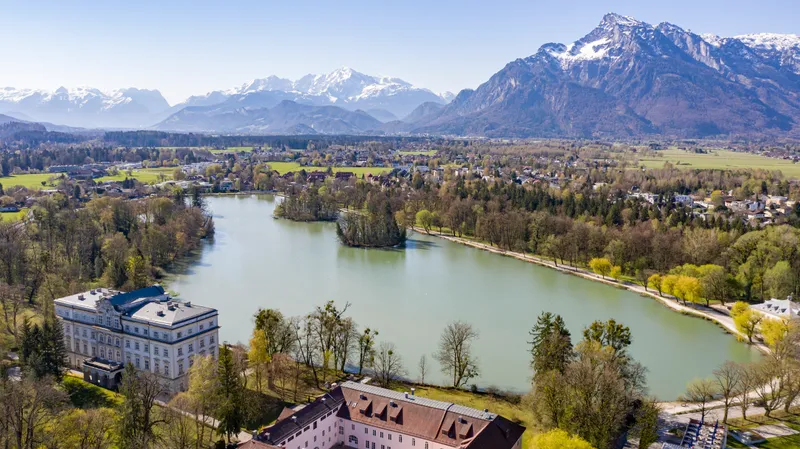
Salzburg's tourist energy pools in a tight ring of squares on the left bank and around Mirabell on the right. Nonntal sits just outside that ring, in the green bowl that opens south from the back of the fortress hill toward Hellbrunn. The crowds never quite spill over the saddle into it, which is why a district that is barely ten minutes' walk from the cathedral can feel like a different, gentler town — gardens behind walls, the convent bell, students cycling to lectures, the fortress looming reassuringly overhead.
Geography does the work. The Festungsberg and the Nonnberg ridge wall Nonntal off from the Altstadt, so there is no through-traffic of sightseers and no thoroughfare of souvenir shops. What you get instead is ordinary Salzburg life lived under an extraordinary skyline: bakeries and corner shops, the university buildings of the theology and law faculties, quiet residential lanes and the long, tree-lined Hellbrunner Allee leading off toward the palace. It is the part of the centre where the city exhales.

Nonnberg Abbey, the district's crown
The reason most visitors climb up into Nonntal at all is Nonnberg Abbey, the Benedictine convent that has stood on the ridge since around 714 and is reckoned the oldest continuously inhabited convent north of the Alps. It is a working community of nuns, not a museum, so visiting means a respectful look at the abbey church rather than a ticketed tour — but the church, with its frescoes and the calm of more than thirteen centuries of prayer, is worth the gentle climb on its own.
It is also a Sound of Music landmark, and unusually for the film, an honest one: this is the actual convent the real Maria von Trapp entered, and the cloister gates here stood in for the exterior of the convent scenes. Fans climb the Nonnbergstiege, the old stepped lane from the Kaigasse end of the Old Town, to reach it. Time your visit for early morning or late afternoon, when the light is soft on the stone and the courtyard is hushed, and remember it is a place of worship first — keep voices low and dress modestly inside the church.
Eating and drinking like a local
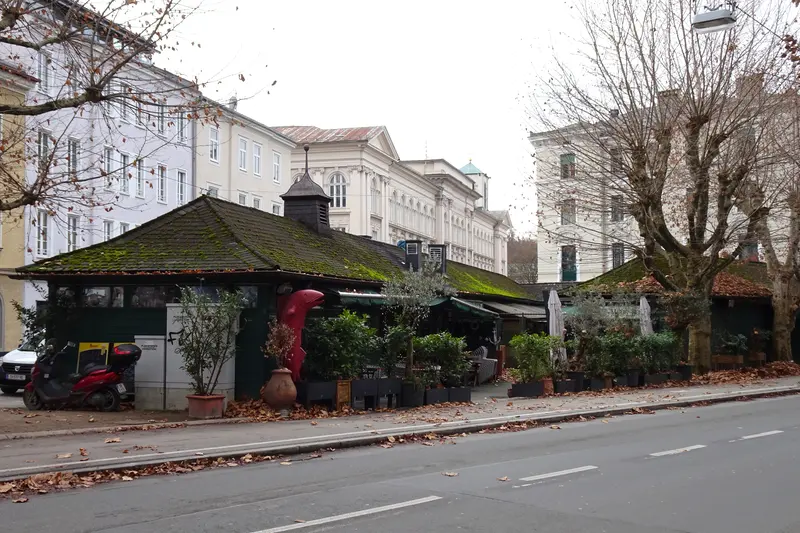
Because Nonntal is residential and ringed by university faculties, its food scene is refreshingly unposed. This is where you find the neighbourhood Gasthaus serving a proper Tagesteller at lunch, the student café with cheap coffee and a noticeboard, the bakery that the whole street queues at, and the occasional ambitious kitchen that locals book for a birthday rather than a tour itinerary. Prices run noticeably lower than on the squares a few hundred metres away, and the welcome is warmer for it.
The trick is to eat where the people who live here eat. A simple plate of Wiener Schnitzel, fresh local trout or a bowl of soup in an unfussy Nonntal Gasthaus often beats anything you'd pay double for under the cathedral. Menus and opening hours change with the seasons and the university term, so we don't quote fixed dishes or prices — wander, read the chalkboards, and trust a full room of locals over an empty room with an English menu in the window.
Staying in Nonntal
As a base, Nonntal is one of Salzburg's quiet winners. You are close enough to walk to every left-bank sight in well under fifteen minutes, but far enough from the squares that your evenings are calm and your mornings start with birdsong rather than delivery trucks rattling over cobbles. The streets here are mostly level and paved rather than the ankle-testing setts of the Altstadt, which makes it kinder for wheeled luggage, strollers and tired legs.
The accommodation tends toward small hotels, guesthouses and apartments rather than grand Old Town addresses, which generally means better value than a room with a cathedral view. It suits couples after a romantic, unhurried stay; families who value a quiet street and space; and returning visitors who already know the squares and now want to live a little closer to the real city. During the Festival, when central hotels fill and prices climb, Nonntal's calm and walkability make it an especially smart choice — book well ahead and confirm the exact walk to the venues.

A slow half-day in and around Nonntal
Treat Nonntal as a deliberate change of pace rather than a checklist. Start with the climb to Nonnberg Abbey first thing, while the courtyard is still and the city below is waking. Drop back down into the district for coffee and a pastry in a local café, then follow the green of the Hellbrunner Allee — the long, straight, tree-lined avenue that runs south toward Hellbrunn Palace — for as far as you fancy before turning back. It is one of the loveliest level walks in the city, used by locals to jog and cycle, and almost entirely missed by visitors.
From Nonntal you are also perfectly placed to swing up to the fortress along the Nonnberg side, or to drop into the cathedral squares for the headline sights and then retreat back to a quiet dinner. That contrast — grand Baroque theatre five minutes one way, leafy residential calm the other — is exactly what makes basing yourself here so pleasant. Bring comfortable shoes for the abbey steps, a layer for the cooler ridge air, and an appetite for the kind of honest Salzburg meal the tourist centre rarely serves.


The university edge and a student-priced city
Part of Nonntal's character comes from the university. The theology and law faculties of the Paris Lodron University sit in and around the district, which means a steady current of students gives the streets a youthful, unfussy energy quite unlike the genteel hush of the Old Town. It is the kind of texture that travellers prize without always being able to name it: cheap good coffee, second-hand bookshops, cyclists, the buzz of term-time and the calm of the holidays, all under that improbable fortress skyline.
For a visitor on a budget, the student presence is a practical gift. Where students eat, prices stay sane, and Nonntal's lunch spots reflect that — generous, plain, affordable plates a stone's throw from the most expensive squares in Austria. It is also simply a pleasant counterweight to the Disneyfied feel that the most touristed corners of Salzburg can take on in high season: a reminder that this is a living, working, learning city and not only a stage set for the Festival and the Sound of Music coaches.

Practical notes for a Nonntal stay
A few practicalities make a Nonntal base run smoothly. The district is mostly level and paved, which is kind to wheeled luggage and tired legs, but the climb up to Nonnberg Abbey is genuinely stepped and steep — fine for most, worth knowing for anyone with mobility limits. City buses run along the edges of the district rather than through its quietest lanes, so check where your nearest stop sits relative to your accommodation, and remember the Guest Mobility Ticket given to overnight guests covers regional public transport if you want to range further afield.
Time of day shapes the experience here more than in the busy centre. Early mornings are magical — the abbey courtyard still, the streets empty, the fortress catching the first light — while evenings are quiet and safe, with dinner in a neighbourhood Gasthaus and a short, calm walk home. It is not the district for nightlife or late-night dining; for that you'll walk the few minutes into the Old Town. As a place to sleep, eat honestly and wake somewhere beautiful and calm, though, Nonntal is one of central Salzburg's best-kept secrets — verify the abbey's opening hours and your hotel's exact walk to the squares, and the rest looks after itself.

Related guides

Nonnberg Abbey Guide
How to visit Nonnberg Abbey respectfully, with Sound of Music context, viewpoints over the Old Town and walking-route notes up the back of the fortress hill.
Read guide
Hohensalzburg Fortress Guide
A practical guide to Hohensalzburg Fortress — tickets, the Festungsbahn funicular, the state rooms and museums, the best viewpoints, timing and Salzburg Card notes for the hilltop castle.
Read guide
Family Hotels in Salzburg
Where families should stay in Salzburg — space and connecting rooms, a real breakfast, flat walks and transit, and easy reach to Hellbrunn, the fortress, the zoo and the Old Town with kids.
Read guideMore in Neighborhoods
6
Altstadt Salzburg Guide
The Altstadt as a place to stay and spend time — the Old Town's sights, hotels, restaurants, Christmas markets, Festival crowds and the romantic lanes that reward an early start.
Read guide
Andräviertel Guide
Everyday Salzburg north of Mirabell — the Schranne market, neighbourhood cafés and bakeries, independent boutiques, St Andrä's church and practical, station-adjacent hotels at gentler prices.
Read guide
Elisabeth-Vorstadt & Station Area
Train-station convenience, budget and mid-range hotels, arrival logistics and the honest tradeoffs of staying near Salzburg Hauptbahnhof.
Read guide
Hellbrunn Area
Salzburg's leafy south — the palace park and trick fountains, the zoo, flat cycle paths, family-friendly stays and an Advent market, with honest notes on getting in and out.
Read guide
Lehen Guide
Budget stays, modern Salzburg, good transit and riverside routes — and an honest take on when Lehen is practical rather than picturesque.
Read guide
Leopoldskron & Moos
A lake-quiet corner south-west of the Old Town — palace views, reflective water, Sound of Music context, calm stays and the honest bus-versus-taxi tradeoffs of basing yourself here.
Read guide