Salzburg Pastry and Desserts
The Mozartkugel, Sachertorte, strudel, the coffeehouse cake counter, Christmas treats and the Salzburger Nockerl — Salzburg's sweet repertoire and where it fits your day.

Photo: Harry Dona / Unsplash
- ✓The Mozartkugel — pistachio marzipan and nougat in dark chocolate — was invented in Salzburg by confectioner Paul Fürst in 1890.
- ✓The original 'Original Salzburger Mozartkugel' is still hand-made at Café Fürst; the foil-wrapped supermarket versions are different products.
- ✓Apfelstrudel and Topfenstrudel, Sachertorte, Esterházy and cream slices are the coffeehouse-counter staples.
- ✓Salzburger Nockerl, the city's mountain-shaped soufflé, is the signature warm dessert — shared and ordered early.
- ✓Advent brings its own sweets: Lebkuchen, roasted chestnuts, Bratapfel and Christmas-market punch and stollen.
A city built on sugar
Salzburg has a sweet tooth to match its Baroque excess. The same wealth that gilded the churches and built the marble squares also funded centuries of elaborate confectionery, and the city still takes its cakes, chocolates and pastries seriously. Sweetness here runs from the famous round chocolate that bears Mozart's name to the glass cake counters of the coffeehouses, the paper-thin strudels, the seasonal treats of the Christmas markets, and the city's own theatrical soufflé.
This guide is your map to the lot: what each sweet actually is, which version to buy (the Mozartkugel question is a real one), and where a dessert stop best fits into a day of sightseeing. Some of these are buy-and-walk treats for the pocket; others are sit-down rituals over coffee. Pair it with the cafés guide for where to sit, the Nockerl guide for the warm showpiece, and the wider food guide for the savoury half of the table.
At a glance
The sweet repertoire in brief. Notes are evergreen — confectioners, prices and seasonal items change, so confirm specifics on the day.
- The icon: the Mozartkugel — marzipan and nougat ball in dark chocolate, invented in Salzburg in 1890.
- The original: hand-made at Café Fürst as the 'Original Salzburger Mozartkugel', wrapped in silver-and-blue foil; supermarket brands differ.
- Coffeehouse cakes: Sachertorte, Apfelstrudel, Topfenstrudel, Esterházy, Cremeschnitte, seasonal tortes.
- The warm showpiece: Salzburger Nockerl — a shared soufflé, ordered with the mains (see its own guide).
- Sweet 'mains': Kaiserschmarrn (caramelised shredded pancake) and Topfenknödel (quark dumplings).
- Christmas-market sweets: Lebkuchen, roasted chestnuts, Bratapfel, stollen, gingerbread and hot punch.
- Best as a souvenir: a box of hand-made Fürst Mozartkugeln, far better than airport tins.
- Where: confectioners and coffeehouses around the Old Town squares and Getreidegasse; Christmas treats at the Advent markets.
The Mozartkugel — and which one to buy
The Mozartkugel is Salzburg's edible emblem: a small sphere of green pistachio marzipan wrapped in nougat and coated in dark chocolate, named for the city's most famous son. It was invented in Salzburg in 1890 by the confectioner Paul Fürst, who reportedly called it the 'Mozart-Bonbon' before the rounder name stuck. His descendants still make it by hand at Café Fürst, dipping each ball on a stick and wrapping it in distinctive silver-and-blue foil under the name 'Original Salzburger Mozartkugel'. This is the real thing, and it tastes noticeably fresher and less cloying than the mass-market versions.
Here's the catch worth knowing: because the name wasn't fully protected, dozens of manufacturers now sell foil-wrapped 'Mozartkugeln', and the gold-wrapped ones you see in supermarkets and gift shops across Austria are industrial products, often machine-made and differently shaped. They're fine as cheap souvenirs, but they aren't the Fürst original. If you want the genuine article — and the best gift to take home — buy the hand-made Fürst kugeln from one of the family's own shops in the Old Town. For other souvenir sweets, the souvenirs guide has more.

The coffeehouse cake counter
The glass vitrine in a Salzburg coffeehouse is where most of the city's dessert action happens, and it rewards a little fluency. Sachertorte is the famous one — a dense chocolate sponge with a thin seam of apricot jam under a hard chocolate glaze, classically served with unsweetened whipped cream to cut its richness. Apfelstrudel is the everyday hero: warm spiced apples, raisins and a few breadcrumbs rolled in pastry stretched until it's nearly transparent. Its cousin Topfenstrudel swaps the apple for sweet quark.
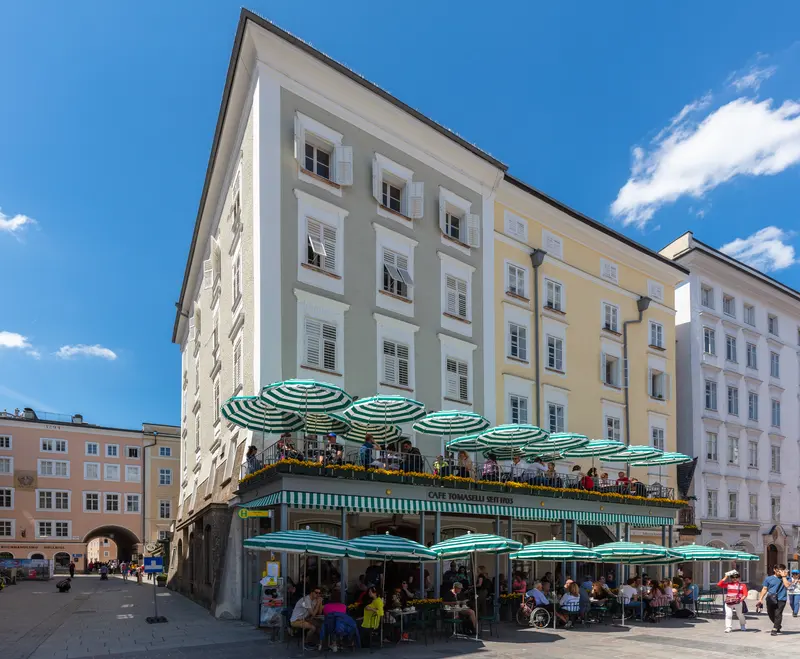
Beyond those, look for Esterházy (a buttercream-and-almond layered torte with a marbled white glaze), Cremeschnitte (a wobbly custard slice between sheets of puff pastry), and a rotating cast of seasonal cakes. At places like Café Tomaselli the cake is brought to your table on a tray so you can choose by sight — point at what tempts you. A slice and a coffee is the classic Salzburg afternoon and remarkably good value for the time at the table it buys.
Warm desserts and sweet mains
Some of Austria's best 'desserts' are substantial enough to be a meal. Kaiserschmarrn — a fluffy pancake torn into pieces, caramelised in butter, dusted with icing sugar and served with plum or apple compote — is hearty mountain food, often eaten as a main after a day outdoors. Topfenknödel, soft quark dumplings rolled in buttery toasted crumbs, are a gentler sit-down sweet. Both blur the line between dinner and dessert in a way that's very Austrian.
The showpiece, of course, is the Salzburger Nockerl: three or four billowing peaks of warm vanilla soufflé dusted with sugar, shaped to mimic the hills around the city. It's enormous, theatrical and meant to be shared, and because it's baked to order you order it with your mains rather than at the end. It has its own full guide, which is the place to go for how and where to try it. Think of the Nockerl as the grand warm finale and the cake counter as the everyday pleasure.
Christmas markets and seasonal sweets
Come Advent, Salzburg's sweetness moves outdoors. The Christkindlmarkt on the Domplatz and Residenzplatz — among the oldest Advent markets anywhere — fills the cold air with the smell of roasted chestnuts (Maroni), gingerbread (Lebkuchen) iced with festive patterns, baked apples (Bratapfel), candied nuts and warm fruit punch. Stollen and other dense, dried-fruit Christmas breads appear in the bakeries, and the markets are as much about these handheld sweets as about the crafts.
It's a different mode of dessert: less about sitting in a chandeliered room and more about walking the lantern-lit squares with something warm and sugary in hand. If your trip falls in late November or December, budget time and appetite for the markets — the seasonal sweets are a highlight in their own right, and they pair with a mug of punch in a way that no coffeehouse cake quite matches on a freezing night.

Fitting dessert into your day
Plan your sweets by type. The Mozartkugel is a buy-on-the-go treat and the obvious edible souvenir — pick up the hand-made Fürst version as you pass one of their shops. The coffeehouse cakes are a mid-morning or mid-afternoon sit-down ritual, ideally slotted between sights with a Melange. The Nockerl is a dinner-time event to share, ordered early. And the Christmas-market sweets are an evening-stroll pleasure for an Advent trip.
A satisfying sweet day might run: a slice of strudel and coffee after the cathedral squares, a box of Fürst kugeln bought to take home, and a shared Nockerl as the finale of a relaxed dinner. However you sequence it, Salzburg makes it easy — there's a sweet for every hour and mood. Use the cafés guide to choose where to sit and the food guide to balance all this sugar with something savoury first.
Related guides

Salzburger Nockerl: The Mountain Soufflé
Salzburg's famous soufflé dessert — what it is, why it's shaped like the hills, where to try it, and how to order and share it without disappointment.
Read guide
The Best Cafés in Salzburg
Salzburg's classic coffeehouses, cake stops, modern coffee bars and rainy-day refuges — plus how to order coffee the Austrian way and when to go.
Read guide
What to Eat in Salzburg
The dishes that define a meal in Salzburg — schnitzel, dumplings, goulash, river trout, strudel, beer-hall classics and the soufflé that mimics the mountains.
Read guideMore in Food & Drink
6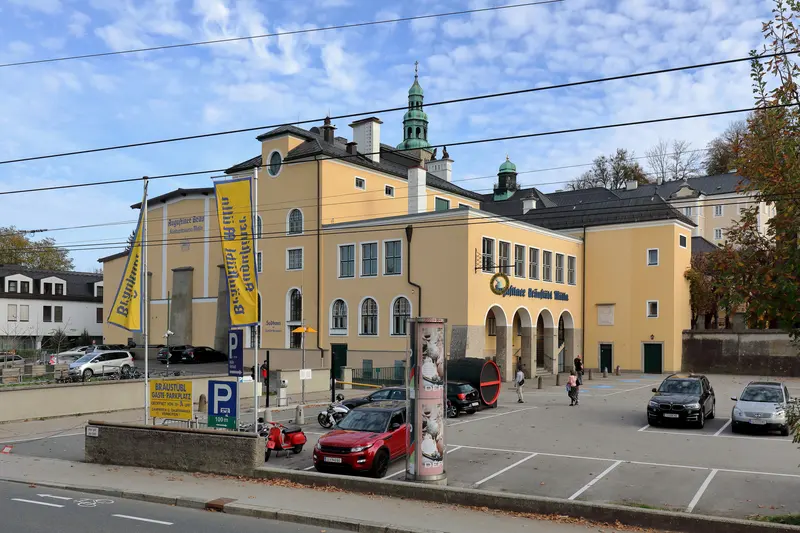
Augustiner Bräu Mülln guide
A full guide to Salzburg's great monastery beer hall — the barrel-poured beer, the stone mug ritual, the food stalls, the chestnut garden, timing and how to do it right.
Read guide
Best Bars in Salzburg
Where to drink in Salzburg after dark — cocktail bars, wine bars, hotel lounges, beer halls, student nightlife and quiet candlelit corners for a low-key evening.
Read guide
Best beer halls in Salzburg
A guide to Salzburg's beer halls and gardens — from the monastery barrels of the Augustiner to the Stiegl world, the city taverns and the etiquette that ties them together.
Read guide
Best Restaurants in Salzburg
A traveller-ready way to choose where to eat in Salzburg — sorted by area, mood and budget, with honest notes on Festival-season demand and when you genuinely need to reserve.
Read guide
Breakfast and brunch in Salzburg
How to start the day in Salzburg — grand coffeehouse breakfasts, hotel buffets, bakery mornings, market stalls and quick meals before an early train or day trip.
Read guide
Budget Eats in Salzburg
Bakeries, market stalls, sausage stands, picnic ideas, casual Austrian lunches and station food — how to eat well in Salzburg without spending much.
Read guide