
Maxglan
Salzburg's practical west — a residential district next to the airport, home to the Stiegl brewery world, with local food, family-friendly stays and honest notes on when it makes sense to base here.

Photo: Eweht / Wikimedia Commons · CC BY-SA 4.0
- ✓Maxglan is a residential district on the western side of Salzburg, between the Old Town and the airport — a real neighbourhood rather than a sightseeing quarter.
- ✓It is home to Stiegl-Brauwelt, the visitor brewery world of Salzburg's best-known beer, one of the area's genuine draws.
- ✓It offers easy airport access, simpler parking than the centre, and generally better value on rooms — practical advantages for drivers, families and short stopovers.
- ✓Everyday Austrian life lives here: local taverns, bakeries, supermarkets and parks rather than tour-group restaurants.
- ✓It is not walking distance from the squares — you'll rely on buses, a bike or a car to reach the Old Town.
At a glance
The quick orientation before you decide whether Maxglan fits your trip — the steady, practical facts.
- Where it is: a residential district west of the Old Town, adjoining Salzburg Airport (Salzburg W. A. Mozart Airport).
- The main draw: Stiegl-Brauwelt, the brewery experience centre of the Stiegl brand, with exhibits, tastings and a beer garden.
- Best for: drivers, families, airport arrivals and departures, longer or budget-conscious stays, and travellers who want everyday local life.
- The trade: you are not in the Old Town and not walking distance from it — plan around the bus, a bike or a car.
- Getting around: city buses connect Maxglan with the centre and the airport; check current line numbers and timetables on arrival.
- Verify before you go: Stiegl-Brauwelt opening hours and any tour booking, plus bus routes — all change, so confirm locally.
An everyday Salzburg, west of the postcard
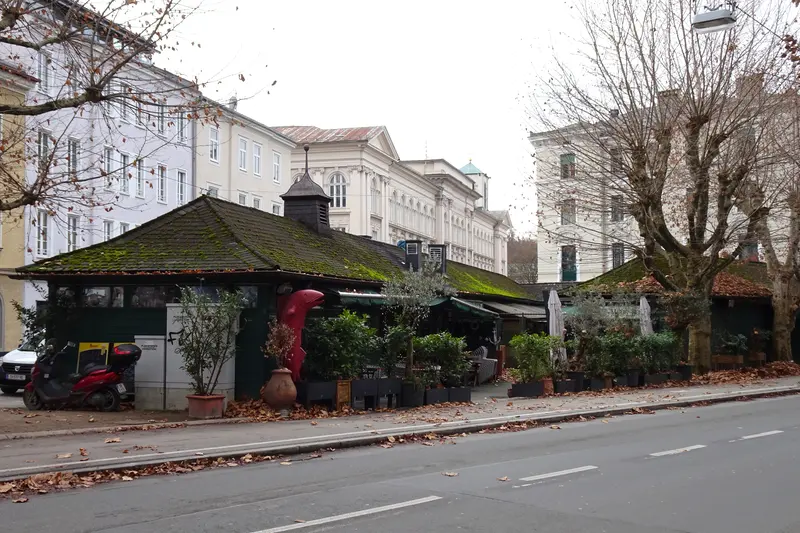
Maxglan is the Salzburg that doesn't make the postcards — and that is exactly why some travellers come to like it. West of the Mönchsberg and the Old Town, stretching out toward the airport and the open country beneath the Untersberg, it is a settled residential district of low houses, gardens, schools, parks and parish life. There are no famous squares here, no fortress underfoot, no crush of tour groups. Instead you get bakeries that locals queue at, neighbourhood taverns serving honest Austrian plates, supermarkets for self-catering, and the unhurried rhythm of a city actually going about its day.
Once a separate village, long since absorbed into the city, Maxglan keeps a faint sense of its own identity — a parish church, a local pride, a slightly slower pace. For visitors it is less a place to sightsee than a place to sleep, eat and use as a practical base, particularly if you are arriving or leaving by air, travelling with a car, or simply want better value and a quieter night than the centre provides. Think of it as Salzburg's sensible, real-life west rather than its showpiece.
Stiegl-Brauwelt — the area's real attraction
Maxglan does have one genuine destination, and beer lovers will already know its name. Stiegl-Brauwelt is the visitor brewery world of Stiegl, Salzburg's most famous beer, brewed in the city since the fifteenth century. Set at the brewery on the western side of town, it offers an exhibition on the history and craft of brewing, tastings, a shop and a large beer garden — a relaxed, grown-up half-day that doubles as a rainy-weather option and a very local experience. It is one of the few times a stay out here puts a real attraction on your doorstep rather than a bus ride away.
Opening hours, tour formats and any need to book ahead vary, so confirm the current details before you go rather than relying on a fixed timetable. If you are interested in the beer-hall side of Salzburg life more broadly, the Augustiner Bräustübl across the city in Mülln is the other great pilgrimage; between them they cover the city's two beer traditions.
The airport, parking and getting into town
Maxglan's defining practical feature is the airport on its edge. Salzburg's airport is small and close to the city, and Maxglan is one of the most convenient districts to stay in if you have an early flight, a late arrival or a tight connection — you can be at the terminal in minutes rather than crossing the whole city with luggage. For a one-night stopover bookending a trip, that convenience is hard to beat.
The other practical wins are parking and price. Out here, away from the pedestrianised centre, parking is far easier and cheaper, which matters enormously if you are touring Austria by car and dread the Old Town's parking puzzle. Room rates, too, tend to be gentler than in the historic core. Our airport-transfer guide sets out the options for getting between the terminal and the city so you can judge whether a Maxglan base saves you real time and money.
The flip side is distance from the sights. You are not walking to the cathedral from here; reaching the Old Town means a city bus, a bike ride or a drive. Buses connect Maxglan with the centre and the airport, but check the current line numbers and timetables when you arrive, as services are periodically reorganised. Factor a short daily journey into your plans and the location works well; expect to stroll out into the squares and you'll be disappointed.

Eating and everyday life
Where Maxglan quietly shines is the everyday. Because it is a real residential district rather than a tourist quarter, the food here is the food locals actually eat: traditional Wirtshäuser serving schnitzel, roast pork and seasonal dishes at fairer prices than the Old Town, neighbourhood bakeries for breakfast, and supermarkets that make self-catering easy for families and longer stays. You won't find a wall of identical tourist menus; you will find honest, unfussy Austrian cooking served to people who live nearby.
For families especially, this practicality adds up. Parks and green space, room to spread out, supermarkets for snacks and supplies, easier parking and quieter evenings all make Maxglan a sensible family base when the children's comfort matters as much as the sightseeing. It lacks romance and atmosphere, but it makes up for it in calm and convenience.
A little history beneath the everyday
Maxglan rewards a second look for its past as well as its practicality. Like several of Salzburg's outer districts, it began as an independent village — a farming community on the plain west of the Mönchsberg — and was only incorporated into the city in the early twentieth century, as Salzburg expanded beyond its medieval and Baroque core. Traces of that village identity survive in the parish church of St Vinzenz Pallotti and the older houses near the historic centre of the district, and locals still speak of Maxglan with the slight separateness of a place that remembers being its own.
The district also carries a sombre chapter that is worth knowing. During the Second World War a Roma and Sinti internment camp stood at Maxglan, one of the darker pages in Salzburg's twentieth-century history; today a memorial marks the site and the community's loss. It is not a sightseeing stop in the usual sense, but for travellers who care about a place's full story, it adds a quiet depth to what can otherwise read as a purely functional suburb. Knowing it changes how you walk these ordinary streets.
Green space and the western edge of the city
One underrated advantage of basing yourself in Salzburg's west is how quickly the city gives way to open country. From Maxglan it is a short ride or cycle to the foot of the Untersberg, the great limestone massif that closes the southern horizon and offers a cable car to its summit for one of the best panoramas in the region. The flat, well-marked cycle paths along the Glan stream and out toward the Saalach river make for easy, traffic-light family rides, and the countryside between the airport and the mountains is laced with quiet lanes and meadows that feel a world away from the Old Town crush.
This green edge is part of what makes Maxglan a sensible base for travellers who want to balance city sightseeing with fresh air. After a morning in the squares, you can be walking or cycling beneath the Untersberg by mid-afternoon without an organised day trip. For families and active visitors, that combination — a calm, affordable base with countryside and a mountain on the doorstep, and the historic centre a bus ride away — is the real, if understated, case for staying out here.


Who should stay in Maxglan?
Maxglan suits a clear set of travellers. Choose it if you have an early or late flight and want to be near the airport; if you are touring by car and value easy parking; if you are travelling with family and want space, value and supermarkets; or if you are happy to bus and bike into town in exchange for a quieter, cheaper night. For these trips it is a smart, underrated base, and our family-hotels guide points to the best places to sleep out here.
Look elsewhere if this is a short first visit built around the Old Town and you want to step out of your door into the atmosphere — for that, sleeping in or beside the Altstadt or around Mirabell will serve you far better. Maxglan is about practicality, not poetry: a real neighbourhood that earns its place for the traveller who wants convenience and value over a fortress view from the window.

Related guides

Salzburg Airport to City Center
How to get from Salzburg Airport (W. A. Mozart) into the Old Town, Mirabell and the station — the city bus, taxis, transfers and what to expect on arrival.
Read guide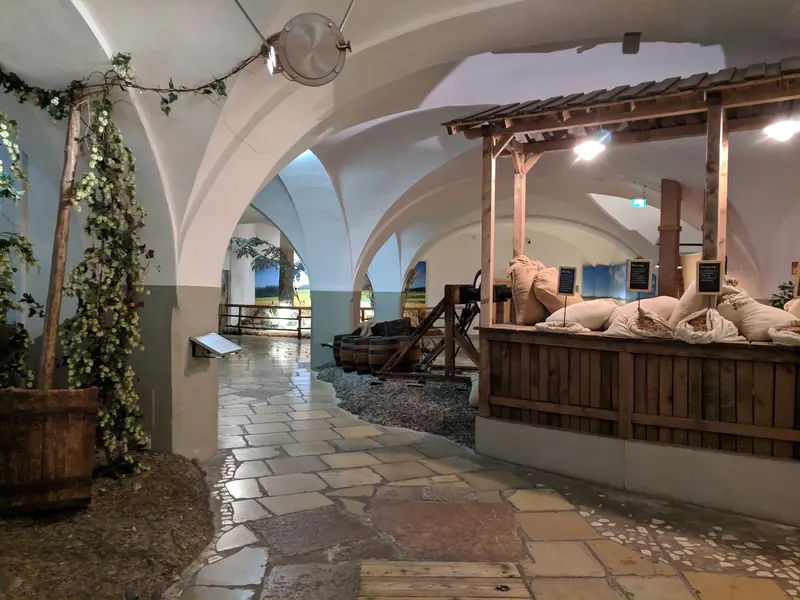
Stiegl-Brauwelt guide
A guide to the Stiegl-Brauwelt in Maxglan — Salzburg's home brewery's museum, tastings, restaurant and beer garden, with logistics and when beer lovers should make the detour.
Read guide
Family Hotels in Salzburg
Where families should stay in Salzburg — space and connecting rooms, a real breakfast, flat walks and transit, and easy reach to Hellbrunn, the fortress, the zoo and the Old Town with kids.
Read guideMore in Neighborhoods
6
Altstadt Salzburg Guide
The Altstadt as a place to stay and spend time — the Old Town's sights, hotels, restaurants, Christmas markets, Festival crowds and the romantic lanes that reward an early start.
Read guide
Andräviertel Guide
Everyday Salzburg north of Mirabell — the Schranne market, neighbourhood cafés and bakeries, independent boutiques, St Andrä's church and practical, station-adjacent hotels at gentler prices.
Read guide
Elisabeth-Vorstadt & Station Area
Train-station convenience, budget and mid-range hotels, arrival logistics and the honest tradeoffs of staying near Salzburg Hauptbahnhof.
Read guide
Hellbrunn Area
Salzburg's leafy south — the palace park and trick fountains, the zoo, flat cycle paths, family-friendly stays and an Advent market, with honest notes on getting in and out.
Read guide
Lehen Guide
Budget stays, modern Salzburg, good transit and riverside routes — and an honest take on when Lehen is practical rather than picturesque.
Read guide
Leopoldskron & Moos
A lake-quiet corner south-west of the Old Town — palace views, reflective water, Sound of Music context, calm stays and the honest bus-versus-taxi tradeoffs of basing yourself here.
Read guide