
Salzburg beer hall etiquette
How a Salzburg beer hall actually works — ordering, the self-service stone-mug ritual, shared tables, food stalls, the 'Prost' and tipping — so you walk in like a local.

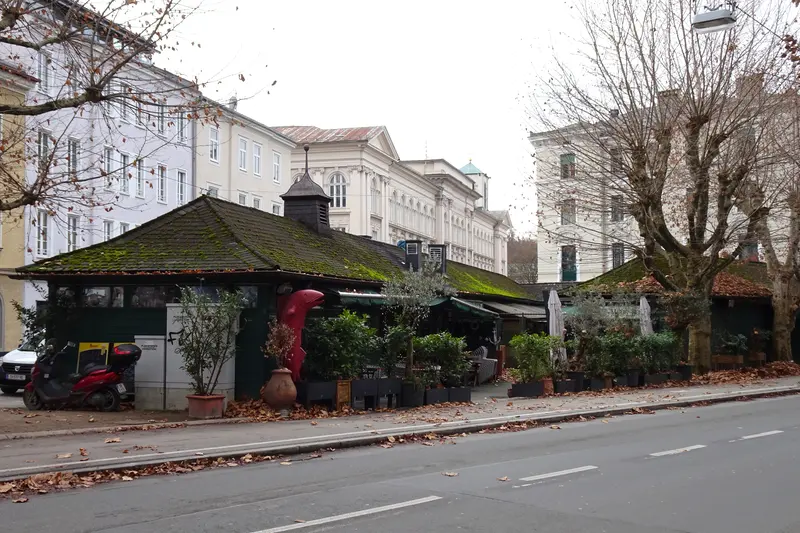
Photo: Simon Legner / Wikimedia Commons · CC BY-SA 4.0
- ✓At the big halls like the Augustiner you serve yourself: take a mug, rinse it, pay at the till, fill it from the barrel and carry it to a table.
- ✓Shared tables are completely normal — ask before sitting, and expect strangers to join yours.
- ✓Clink mugs with a 'Prost', meeting the other person's eyes, before the first sip.
- ✓Food at the Augustiner comes from independent delicatessen stalls; smaller taverns have proper table service.
- ✓Tipping is a modest rounding-up of the bill, not a percentage — and cash makes everything quicker.
At a glance
The short version of how to behave in a Salzburg beer hall, whether you're at the monastery barrels of the Augustiner or a cosy Old Town tavern. The big self-service halls and the smaller table-service Gasthäuser run on slightly different rules, noted below.
- Self-service halls (e.g. Augustiner): fetch, pay for and carry your own beer and food.
- Table-service taverns: order from a waiter as you would in any restaurant.
- Shared tables are normal — ask 'Ist hier frei?' before taking a free spot.
- Say 'Prost' and make eye contact when you clink glasses.
- Bring cash; it's the fastest way to handle tills and food stalls.
- Tip by rounding up, not by adding a fixed percentage.
- Verify before you go: opening days and hours, which vary by venue and season.
Self-service, the stone mug and the barrel
The thing that surprises first-timers most is that Salzburg's grandest beer hall has no waiters. At the Augustiner Bräustübl, and at big halls run on the same lines, you do everything yourself, and once you've watched it happen once it's easy. Take a mug from the long racks — a heavy stone Krug in one of two sizes, or a glass if you prefer — and rinse it under the cold fountain to chill and clean it. Carry it to the till, pay for the size you've chosen, and hand the mug to the tapper, who fills it straight from the wooden barrel and passes it back. Then you carry it to a table.
A few small habits make this painless. Bring cash, because the till moves fastest that way. Choose the smaller mug if you're not sure — you can always return for another, and the large stone Krug is genuinely heavy when full. Don't agonise over which beer: the house lager is what most people drink and it's excellent. And keep your mug when you're done if you fancy a refill; you simply rinse, pay and fill again. None of this applies at a normal tavern, where you sit down and a waiter takes your order in the usual way.
Shared tables, the 'Prost' and the food stalls
Beer halls run on long communal benches, and sharing a table with strangers is not just tolerated but expected. If a table has free space, a quick 'Ist hier frei?' (Is this free?) is all the etiquette you need before sitting; equally, don't be put out when someone asks the same of you. It's part of the charm — a Salzburg beer garden is one of the few places where students, families, locals and travellers genuinely mix. A friendly nod to your neighbours goes a long way, and many a good evening starts with strangers on the same bench.
When the beer arrives, there's one small ritual worth getting right: clink mugs with a clear 'Prost', and meet the other person's eyes as you do. Looking away while you toast is considered a little rude in Austrian custom. Food, at the Augustiner and halls like it, comes from a row of independent delicatessen stalls rather than a kitchen — a roast-meat and butcher's counter, a fish stall, a bakery with pretzels, a deli with cheeses, spreads and salads. You buy what you want from each, assemble it on a tray and carry it back to your beer. At a smaller tavern, by contrast, you simply order food from the menu.

Paying, tipping and the rhythm of an evening
Paying is straightforward, but it works differently by venue. At the self-service halls you've already paid up front at the till, so there's nothing to settle at the end — you just leave when you're ready, ideally returning your mug and tray. At a table-service tavern, you pay the waiter directly. Either way, cash is your friend: it's the fastest way through a till queue and the only sure bet at some food stalls, so carry euros rather than assuming cards everywhere.
Tipping in Austria is modest and based on rounding up rather than adding a set percentage. In a table-service tavern, you typically round the bill up to a convenient figure and tell the waiter the total you want to pay as you hand over the money, rather than leaving coins on the table. At the self-service halls there's little to tip on, though leaving the food-stall change is a kind gesture. Beyond that, the rhythm is simple: the gardens come alive in the late afternoon and evening, tables fill fast on warm nights, and the whole point is to linger. Settle in, share your bench, raise your mug — and enjoy one of the most genuinely local things you can do in Salzburg.

Common questions
Do I have to share a table? At the big halls, effectively yes — long benches are communal and sharing is normal. Ask 'Ist hier frei?' before sitting and expect others to join you.
How do I order at the Augustiner? You serve yourself: take a mug, rinse it, pay at the till, have it filled from the barrel, and buy food from the stalls. There's no waiter.
Is there table service anywhere? Yes — smaller taverns and Gasthäuser work like normal restaurants, with a waiter taking your order. The self-service rule mainly applies to the big monastery halls.
How much should I tip? Round up the bill modestly rather than adding a fixed percentage; in a tavern, tell the waiter the total as you pay. There's little to tip on at self-service halls.
Do I need cash? It's strongly advisable. Cash is fastest at tills and is sometimes the only option at food stalls, so carry euros.
What do I say when toasting? 'Prost' — and make eye contact with the person you're clinking with, which is the expected courtesy.

Related guides

Best beer halls in Salzburg
A guide to Salzburg's beer halls and gardens — from the monastery barrels of the Augustiner to the Stiegl world, the city taverns and the etiquette that ties them together.
Read guide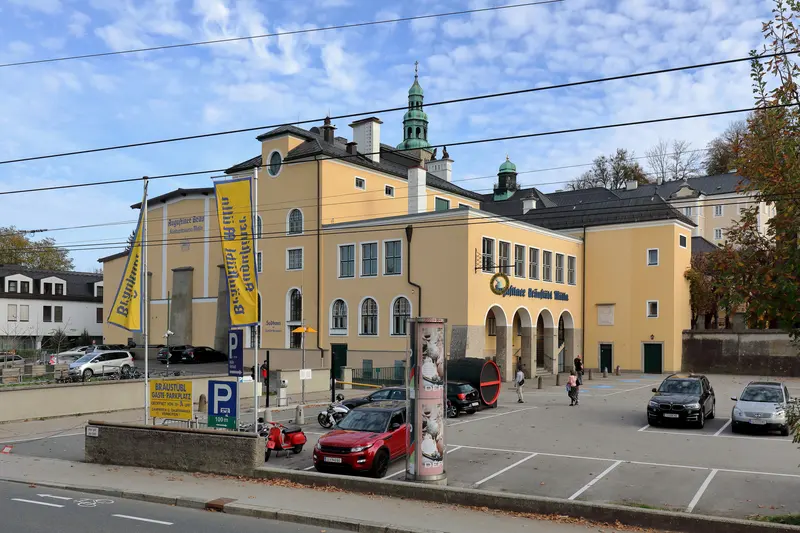
Augustiner Bräu Mülln guide
A full guide to Salzburg's great monastery beer hall — the barrel-poured beer, the stone mug ritual, the food stalls, the chestnut garden, timing and how to do it right.
Read guide
Money and Tipping in Salzburg
How money works for visitors in Salzburg — cards versus cash, ATMs, paying the restaurant bill, tipping norms, markets, taxis, paid toilets and what to expect to carry.
Read guideMore in Food & Drink
6
Best Bars in Salzburg
Where to drink in Salzburg after dark — cocktail bars, wine bars, hotel lounges, beer halls, student nightlife and quiet candlelit corners for a low-key evening.
Read guide
Best Restaurants in Salzburg
A traveller-ready way to choose where to eat in Salzburg — sorted by area, mood and budget, with honest notes on Festival-season demand and when you genuinely need to reserve.
Read guide
Breakfast and brunch in Salzburg
How to start the day in Salzburg — grand coffeehouse breakfasts, hotel buffets, bakery mornings, market stalls and quick meals before an early train or day trip.
Read guide
Budget Eats in Salzburg
Bakeries, market stalls, sausage stands, picnic ideas, casual Austrian lunches and station food — how to eat well in Salzburg without spending much.
Read guide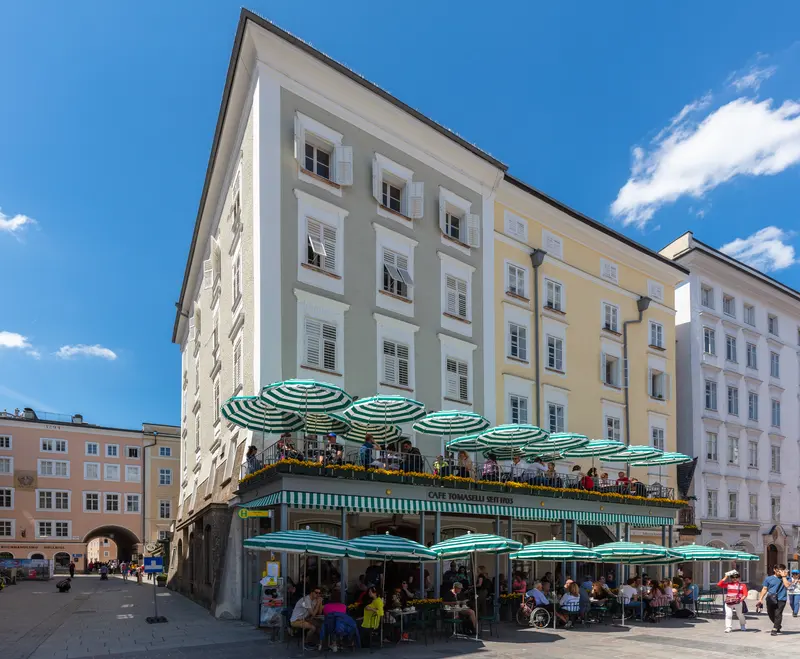
Café Tomaselli: Salzburg's Oldest Coffeehouse
How to visit one of Austria's oldest coffeehouses on the Alter Markt — its history, what to order, the cake tray, the terrace and how to avoid the queues.
Read guide
Family-Friendly Restaurants in Salzburg
Easy, relaxed meals with kids in Salzburg — beer gardens, Old Town spots near the sights, Mirabell and Hellbrunn stops, and what children actually eat here.
Read guide